
Table of Contents
Introduction
History has always shown us one clear truth — every time humanity changes how it gets energy, the balance of global power also changes. In the 18th and 19th centuries, Britain discovered the power of coal and steam engines. This single breakthrough kicked off the Industrial Revolution, allowing Britain to build factories, power ships, and rule over global trade. It became the world’s first modern superpower, all because it mastered a new form of energy.
Then came the 20th century, and oil took center stage. The internal combustion engine changed everything — it powered cars, airplanes, and industries. The United States quickly rose to dominance, while countries rich in oil, especially in the Middle East, gained massive influence. Oil didn’t just fuel machines; it fueled global politics and wars.

Now, in the 21st century, the next big shift is already underway with batteries and solar power. China leads this new race, building solar panels, electric vehicles, and battery systems at record speed. India and Europe are also investing heavily in renewables, trying to keep up.
But the story doesn’t end here. A bigger revolution might be just around the corner — nuclear energy. Imagine a future where small, ultra-safe nuclear reactors can power cars, ships, planes, or even entire cities. If that becomes real, it would completely transform the global power map once again. The next superpower won’t just be the richest or most powerful nation — it will be the one that masters this next wave of energy innovation.
The First Energy Revolution – Coal and Steam
The first great energy revolution began with coal and steam, and it completely changed the world. In the 18th and 19th centuries, coal was much more than just a black rock — it was the fuel that powered an empire. Britain discovered how to use coal to run steam engines, and that discovery became the driving force behind the Industrial Revolution.
Steam engines powered the new factories that produced textiles, iron, and machinery. Railways spread across the country, connecting towns and cities, while steamships made it possible to travel and trade faster than ever before. Goods, people, and ideas started moving across continents in ways that had never been possible. Coal made production faster, cheaper, and more efficient, giving Britain a massive advantage over other nations.
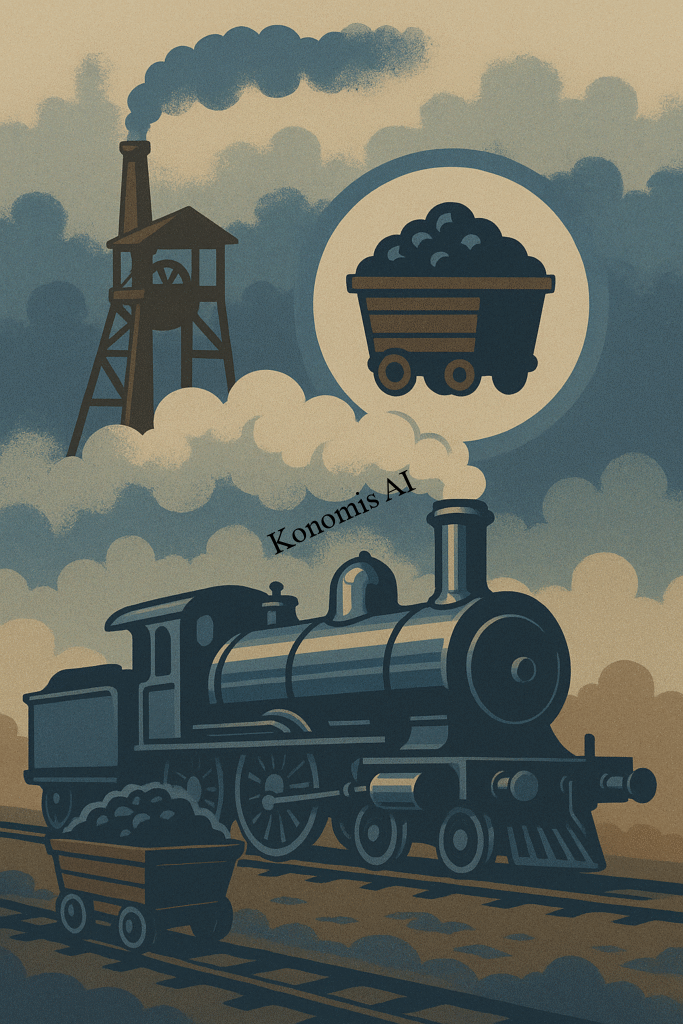
This technological edge allowed Britain to expand its influence far beyond its borders. Coal-powered ships carried goods and soldiers to distant lands, linking colonies under British control. As a result, Britain didn’t just lead in industry — it ruled the seas and global trade routes.
Coal was, in many ways, the energy that built the modern world. It transformed how people worked, lived, and traveled. It also marked the beginning of a new age where energy became the foundation of power. Britain’s mastery of coal and steam made it the first true global superpower, showing the world that whoever leads in energy innovation can shape the course of history.
Oil and the Internal Combustion Engine
The 20th century was truly the age of oil. When the internal combustion engine was invented, it changed everything about how humans moved and lived. Cars, airplanes, ships, and even tanks began to run on petroleum, making oil the most valuable resource on the planet. Countries that had oil — or could control its supply — suddenly became powerful players on the world stage.
The United States quickly rose to dominance during this period. With its rich oil reserves and advanced industries, America built massive factories, strong economies, and unmatched military power. Oil wasn’t just fuel; it became the foundation of modern life — powering homes, industries, and global transportation.
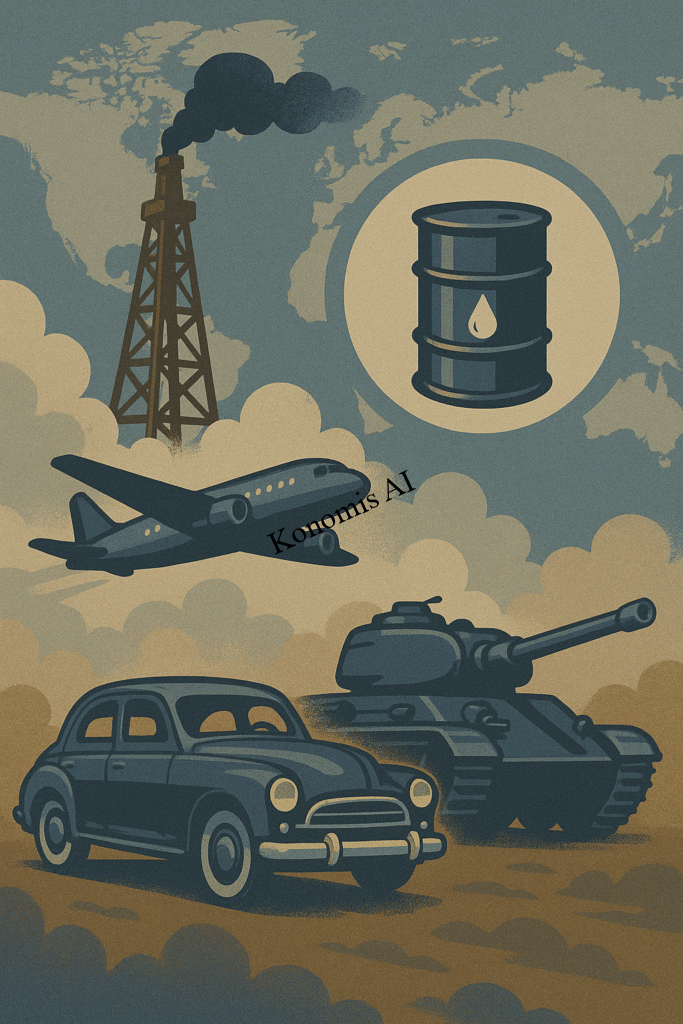
At the same time, the Middle East became a major center of global attention. Nations like Saudi Arabia, Iraq, and Iran held some of the largest oil reserves in the world, turning deserts into sources of immense wealth and political influence. Global alliances, rivalries, and wars were increasingly tied to oil interests.
Even World War II showed how critical oil had become. Armies needed fuel for tanks, aircraft, and ships — whoever controlled oil supplies often controlled the battlefield. It wasn’t just a war for land; it was a war for energy.
By the end of the century, oil had shaped modern civilization. It powered economies, determined political alliances, and influenced almost every global decision. The “oil age” made clear that energy was not just about progress — it was about power, control, and survival.
Batteries and Solar Power in the 21st Century
In the 21st century, the world is witnessing another major energy revolution — this time powered by batteries and solar energy. Unlike the smoke-filled factories of the coal era or the oil rigs of the 20th century, today’s revolution is cleaner, greener, and focused on sustainability. The goal is simple: to reduce dependence on fossil fuels and build a future powered by renewable energy.
Leading this shift is China, which has become the global powerhouse in solar technology and electric vehicle (EV) batteries. It manufactures most of the world’s solar panels and controls a large part of the supply chain for lithium-ion batteries — the heart of modern electric cars and energy storage systems. China also dominates the mining and refining of rare earth minerals, which are essential for making advanced electronics, wind turbines, and battery components.
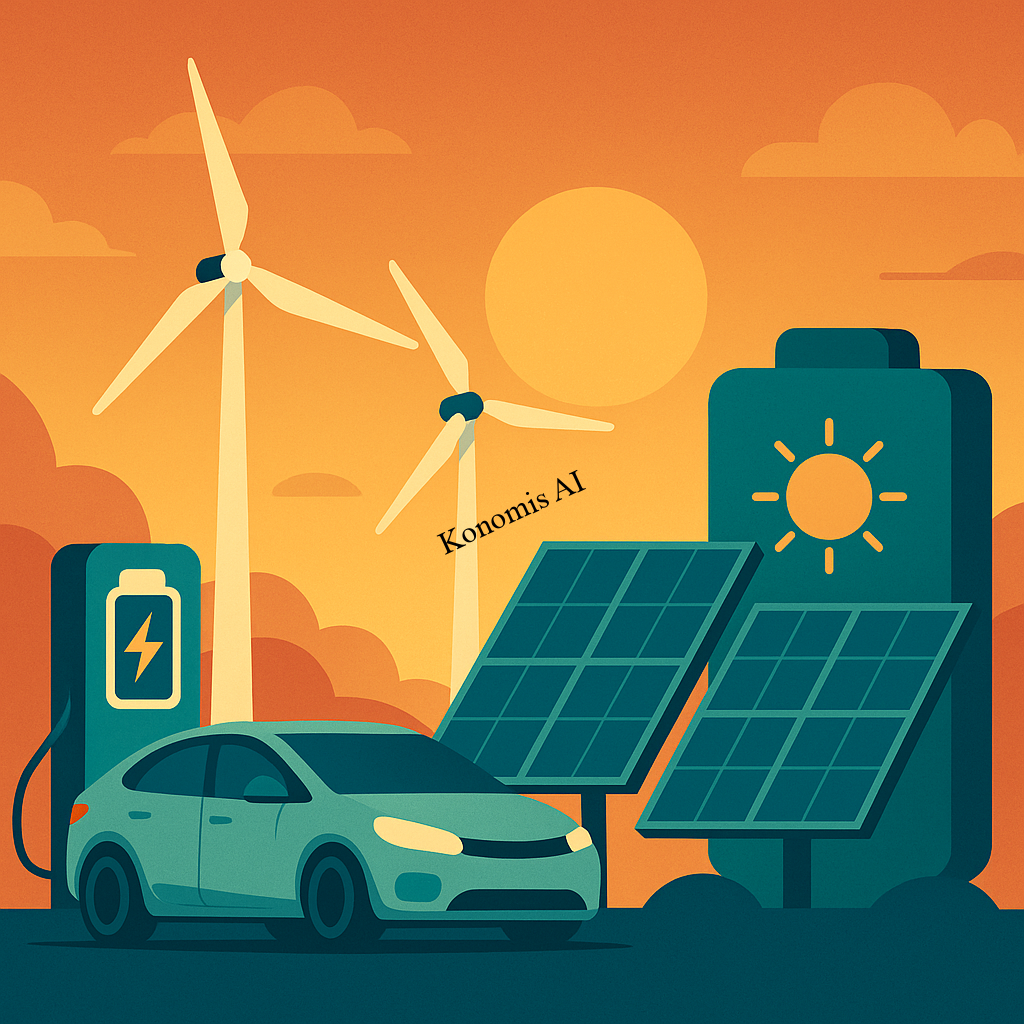
Meanwhile, India and the European Union are catching up fast. India is expanding its solar capacity at an incredible pace, aiming to become one of the largest producers of renewable energy. Europe, too, is investing heavily in clean energy technologies, electric mobility, and battery innovation to reduce reliance on imported oil and gas.
In this new era, the resources that matter most aren’t oil or coal but lithium, cobalt, and rare earth elements. These materials are the “new oil” — the foundation of the renewable economy. Whoever secures them and leads in green technology will hold the keys to global power and influence in the decades ahead.
The Coming Shift – Nuclear Energy on Vehicles
Imagine a future where your car, airplane, or even entire city runs on a tiny, safe nuclear reactor instead of gasoline or electricity from the grid. It might sound like something out of a science fiction movie, but this idea is getting closer to reality every year. Thanks to breakthroughs in small modular reactors (SMRs) and nuclear fusion research, scientists are exploring ways to make nuclear energy compact, safe, and efficient enough to power vehicles, ships, and decentralized cities by the middle of this century.
These advanced reactors would completely transform how we think about energy. Ships could sail around the world without ever refueling. Airplanes could fly for weeks nonstop. Even remote areas or small towns could have their own mini power plants, free from dependence on large power grids or fossil fuels. Imagine never having to charge your car or stop for gas again — energy would become virtually unlimited.
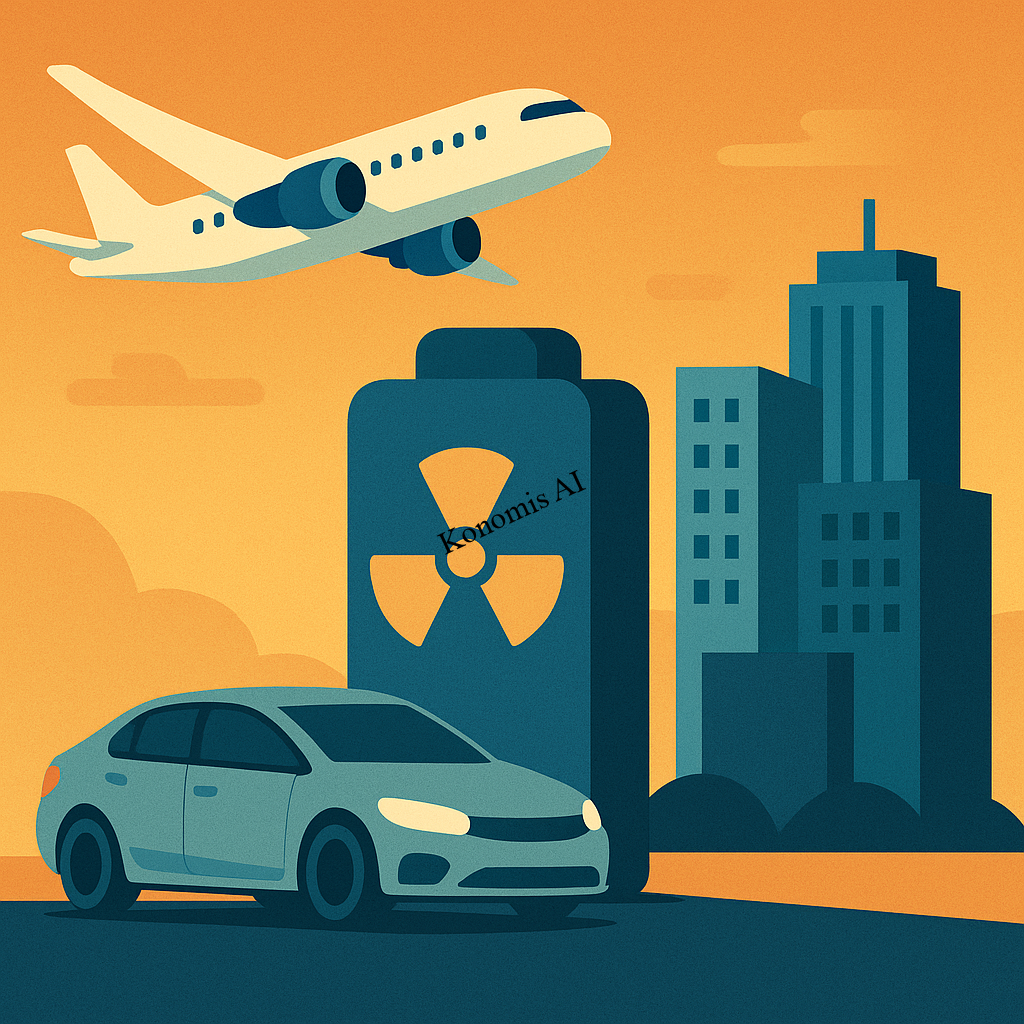
This shift would also rewrite the global energy economy. Just as coal powered Britain’s empire, oil fueled America’s rise, and solar is driving China’s leadership today, nuclear-powered mobility could define the next age of superpowers. Nations that master the art of building and safely operating compact nuclear systems would hold an enormous strategic and economic advantage.
If nuclear vehicles become reality, it wouldn’t just change how we move — it would change who leads the world. Energy, once again, would decide the next great shift in global power.
Technological Leadership in Nuclear Innovation
The race to lead the next nuclear revolution is already underway, and several global powers are competing to take the lead. Each nation is approaching it differently, but the goal is the same — to master safe, compact, and affordable nuclear energy.
The United States has a major advantage because of its long history with nuclear technology. For decades, the U.S. Navy has operated nuclear-powered submarines and aircraft carriers safely. This experience gives the country a solid foundation for developing smaller, civilian reactors. On top of that, private American startups like Helion and Commonwealth Fusion Systems are pushing hard to make nuclear fusion — the cleanest form of energy — a commercial reality.
China is also moving fast. It’s investing billions of dollars into building and testing Small Modular Reactors (SMRs), aiming to scale them across cities and industries. China’s strategy is both domestic and global — it wants to export its reactors just like it did with solar panels and 5G networks, making itself the world’s nuclear technology hub.
Russia is already using nuclear energy in creative ways. It has deployed nuclear-powered icebreakers and even floating nuclear power plants to support its Arctic expansion and remote regions.
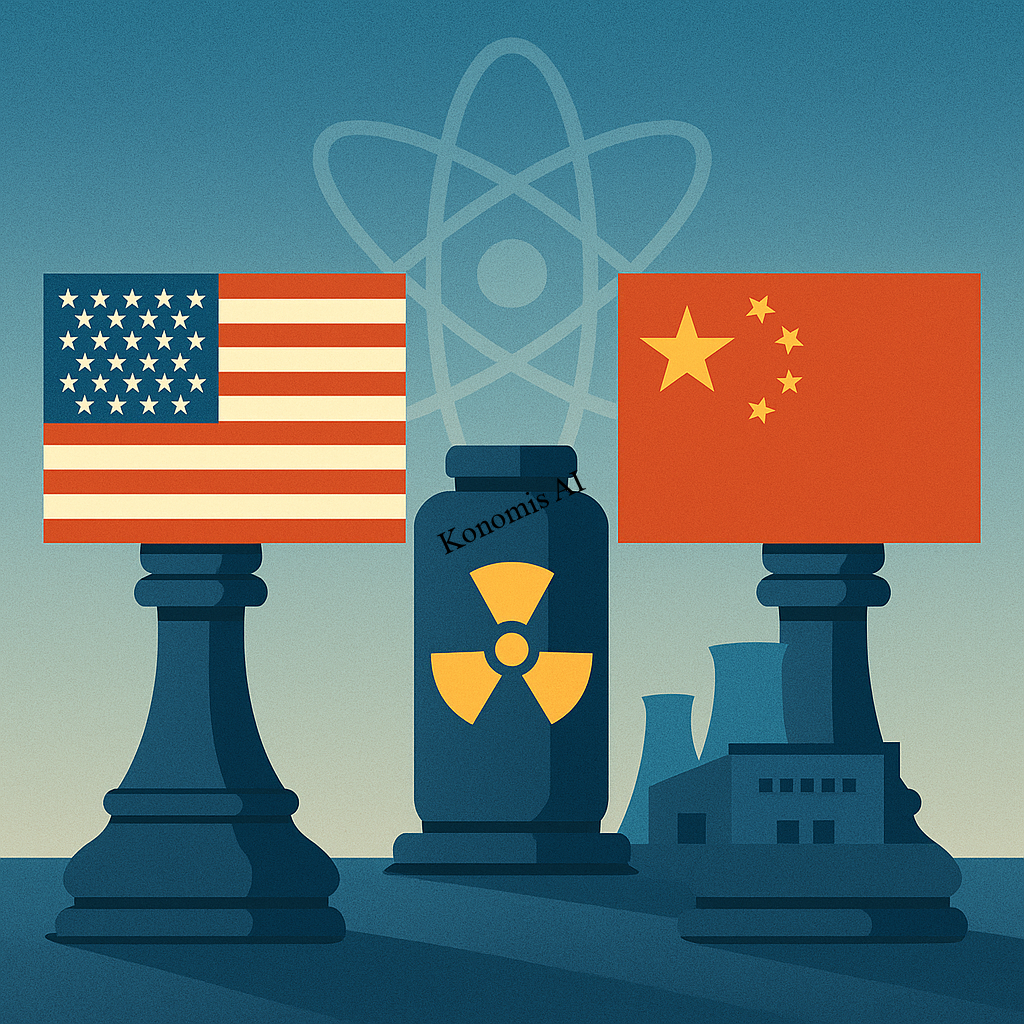
India, on the other hand, is betting big on thorium-based reactors. With some of the world’s largest thorium reserves, India’s research could make nuclear power safer, cleaner, and more sustainable.
Finally, Europe, Japan, and South Korea continue strong R&D in nuclear technology. However, public fear and strict safety regulations often slow down large-scale deployment.
In short, the nuclear race isn’t about weapons anymore — it’s about who can lead the world into a new age of clean, limitless power.
Resource Control in a Nuclear Future
In the coming nuclear era, technology alone won’t decide which nation becomes a superpower — control over key resources will be just as important. Every great energy transition in history has been shaped by access to critical materials, and the same will hold true for nuclear energy.
Let’s start with uranium, the main fuel for today’s nuclear reactors. Countries like Australia and Kazakhstan dominate global uranium production, making them strategic suppliers in the nuclear supply chain. Any nation aiming to expand nuclear power on a large scale will need strong partnerships or control over these resources.
Next comes thorium, a potential game changer. Unlike uranium, thorium is safer, more abundant, and produces less long-term waste. This gives India a remarkable advantage, as it holds some of the world’s largest thorium reserves. India’s long-term nuclear research focuses on using thorium as a clean and sustainable fuel, which could redefine the global energy map if successful.
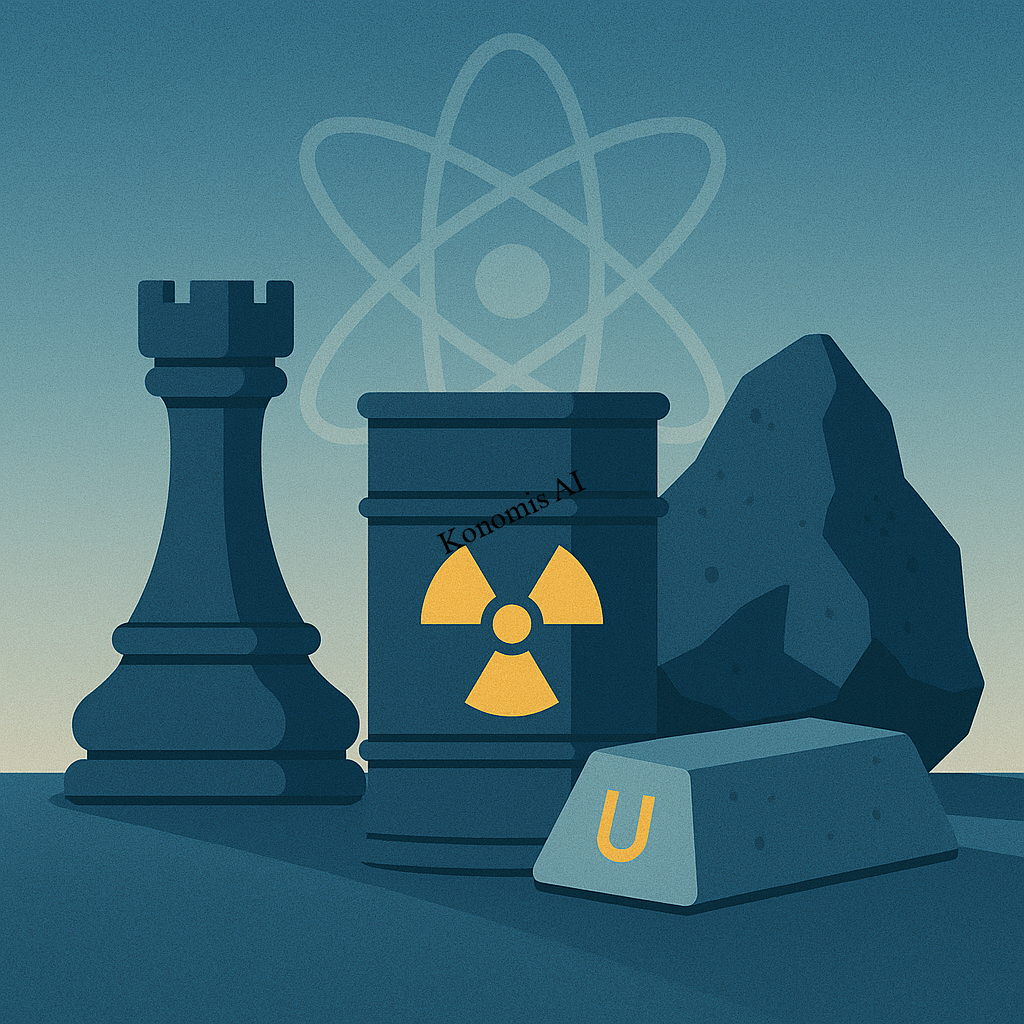
Then there are rare earth elements — materials like neodymium, dysprosium, and lithium that are vital for advanced electronics, renewable batteries, and hybrid nuclear-battery systems. China currently leads in rare earth processing, while the Democratic Republic of Congo holds massive reserves of cobalt, another key component for high-performance batteries.
In this new age, resources like uranium, thorium, and rare earths will become the “new oil.” Nations that secure and manage them wisely will hold enormous power — not through military might alone, but through energy dominance that fuels the future.
Fusion Power – The Ultimate Breakthrough
Fusion power is often called the holy grail of energy, and for good reason. It promises something the world has always dreamed of — clean, limitless, and safe power. Unlike traditional nuclear fission, which splits atoms and creates radioactive waste, fusion works by joining light atoms (like hydrogen) together, releasing massive amounts of energy — just like the process that powers the sun. The best part? Fusion produces no long-lived radioactive waste and carries minimal risk of meltdown.
Right now, several countries and private companies are racing to make fusion a reality. The United States is taking a bold lead through private innovation. Startups like Helion Energy and Commonwealth Fusion Systems are working to develop compact, cost-effective reactors that could supply continuous clean power to cities, industries, and possibly even vehicles. These companies are moving fast — aiming for commercial fusion within the next decade or two.
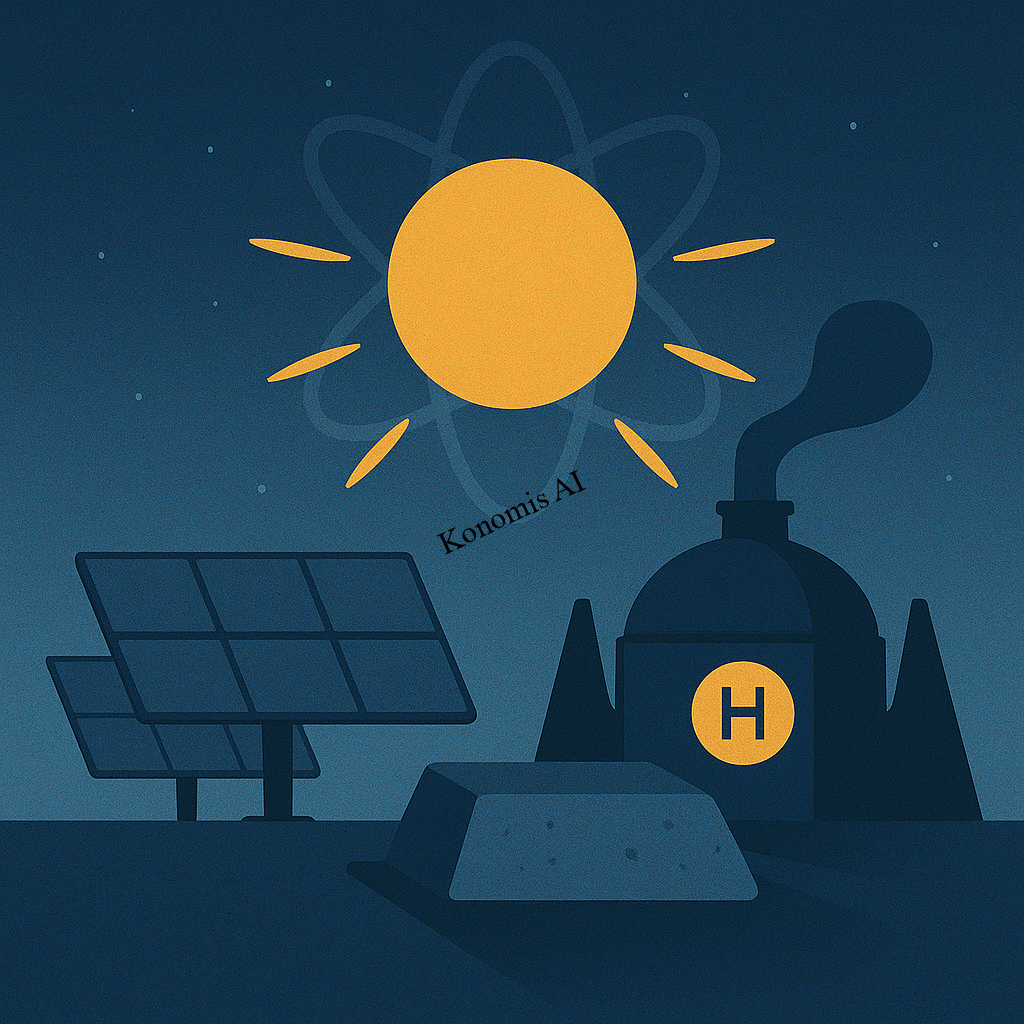
Meanwhile, China and the European Union are investing heavily in the massive ITER project in France — a global collaboration aiming to prove that fusion can work at scale. If successful, ITER could lay the foundation for commercial fusion plants worldwide.
Whoever achieves practical fusion energy first will effectively rewrite the global energy order. With fusion, there would be no need for fossil fuels, no energy shortages, and no geopolitical dependency on oil or gas. The nation that masters fusion won’t just lead in technology — it will control the future of global power itself.
Likely Geopolitical Scenarios
Scenario 1 – U.S. Fusion Dominance
If American companies manage to develop small, working fusion reactors, the United States could secure another century of global leadership. Fusion power would give the U.S. an endless supply of clean energy — energy that’s cheap, safe, and sustainable. This breakthrough would not only solve America’s energy challenges but also fuel its dominance in technology, defense, and global economics.
Imagine a future where U.S.-made fusion reactors power entire cities, space stations, or even spacecraft. With AI-driven energy management systems and the country’s already strong innovation ecosystem, the U.S. would have a clear edge in both science and industry. This combination of AI, space exploration, and fusion power could reshape how America builds, travels, and competes — allowing it to stay decades ahead of its rivals.
Moreover, fusion energy would drastically reduce global dependence on fossil fuels and foreign resources. That means fewer energy-related conflicts and more strategic independence for the U.S. It could also export fusion technology worldwide, creating a new kind of soft power — not through military strength, but through the promise of limitless, clean energy.
If the U.S. wins the fusion race, it won’t just continue its dominance; it will redefine it. Fusion power could mark the start of a new “American Century,” driven not by oil and industry, but by innovation, clean energy, and intelligent technology.
Scenario 2 – China’s Nuclear Scaling
If China successfully scales up Small Modular Reactors (SMRs) and exports them around the world, it could completely reshape the global energy landscape. These compact, factory-built reactors can provide reliable power anywhere — from remote mining sites to major cities — and China is already working to mass-produce and deploy them at record speed.
By integrating nuclear technology into its Belt and Road Initiative (BRI), China could build a vast international network of nuclear-powered infrastructure. Imagine Chinese-built reactors supplying electricity to developing nations across Asia, Africa, and the Middle East — regions currently hungry for affordable, stable energy. Each project would deepen China’s economic and political influence, turning its energy technology into a powerful tool of diplomacy.
Domestically, SMRs would also strengthen China’s energy independence. They could help replace coal plants, cut carbon emissions, and ensure energy security for its massive population. Combined with China’s leadership in solar, batteries, and rare earth materials, nuclear scaling would make the country nearly self-sufficient in power generation.
If this vision succeeds, China would become the central hub of the next global energy order, supplying both hardware and expertise to much of the developing world. Just as it once dominated manufacturing and renewables, China could dominate nuclear energy as well — positioning itself as the world’s most influential energy superpower in the mid-21st century.
Scenario 3 – India’s Thorium Surprise
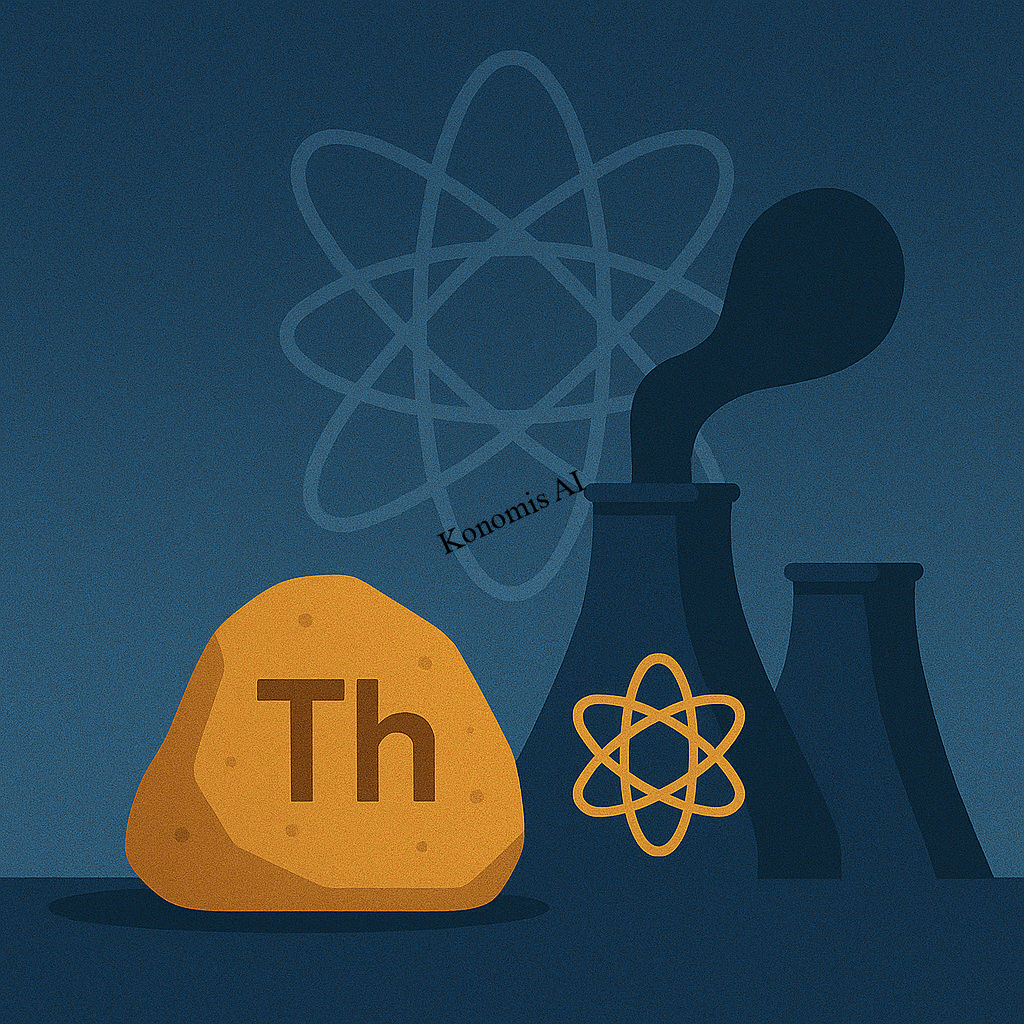
India could very well become the dark horse of the global nuclear race — a nation quietly building its strength through innovation and resources that others have overlooked. With one of the world’s largest thorium reserves, India holds a unique advantage that could completely change the energy game. Unlike uranium, thorium is safer, more abundant, and produces less radioactive waste, making it an ideal fuel for next-generation nuclear reactors.
For decades, Indian scientists have been working on advanced thorium-based reactor designs, particularly within the framework of the country’s three-stage nuclear program. This long-term vision focuses on using thorium to create a sustainable, closed fuel cycle — meaning India could power itself for centuries without depending on imported fuel.
If India succeeds in commercializing thorium reactors, it would become the first truly self-reliant nuclear superpower. This achievement wouldn’t just secure India’s energy independence; it would elevate the nation’s global standing. It could export clean, safe, and affordable nuclear technology to developing countries, strengthening diplomatic ties and reshaping the balance of power in Asia.
While the U.S. bets on fusion and China on modular reactors, India’s steady investment in thorium could lead to an unexpected breakthrough. The world might wake up one day to find India leading a new era of sustainable nuclear energy, built not on competition, but on innovation, self-reliance, and long-term vision. This “Thorium Surprise” could make India the most unexpected — yet unstoppable — energy superpower of the 21st century.
Risks and Challenges of the Nuclear Vehicle Age
While the idea of nuclear-powered vehicles and decentralized energy sounds exciting, the path to this future is filled with serious challenges. Nuclear energy isn’t a perfect solution — it comes with complex risks that need to be addressed before it can safely power our daily lives.
One of the biggest hurdles is public fear of nuclear accidents. Disasters like Chernobyl and Fukushima still linger in global memory, creating widespread mistrust toward anything labeled “nuclear.” Even with modern safety advancements, convincing people that small reactors in cars, planes, or cities are safe will take time, transparency, and education.
Then there’s the issue of long-term nuclear waste storage. Although next-generation reactors produce less waste, it still needs to be stored securely for decades or even centuries. Finding suitable locations and building stable facilities for that waste remains a global challenge.
The rise of nuclear terrorism and cyber threats adds another layer of risk. As nuclear technology becomes more widespread, the potential for misuse increases. Hackers or hostile groups could target nuclear systems, making security one of the top priorities in this new age.
Lastly, international regulations could slow progress. Strict treaties, political rivalries, and differing safety standards may delay innovation and global adoption.
In short, before the nuclear vehicle age can truly begin, the world must overcome these fears and technical barriers. Only through global cooperation, strong regulation, and transparent innovation can humanity safely unlock the immense potential of nuclear-powered progress.
The Future of Global Trade and Society
If nuclear-powered vehicles become reality, the impact on global trade, society, and even space exploration would be nothing short of revolutionary. The way we move goods, people, and even entire economies would change forever.
Imagine cargo ships that can sail across the world’s oceans without ever stopping to refuel. Global trade would become faster, cheaper, and more efficient. Shipping companies wouldn’t be limited by fuel costs or supply chains, making international trade almost limitless. Aircraft could fly continuously for days or even weeks, connecting any two cities on Earth directly without layovers. The logistics and aviation industries would experience a transformation as big as the invention of flight itself.
At the same time, cities could become energy self-sufficient, powered by compact reactors rather than massive centralized grids. This would reduce vulnerability to power outages, natural disasters, and cyberattacks. Remote or underdeveloped regions could suddenly gain stable energy access, accelerating global development.
However, this new world would also bring massive economic shifts. Oil-dependent nations could face steep declines in relevance and revenue as demand for fossil fuels drops. Traditional energy giants might lose influence, while nuclear innovators rise as the new global leaders.
And it doesn’t stop on Earth. The same compact nuclear reactors that could power cities and vehicles here could also revolutionize space exploration. Companies like Elon Musk’s SpaceX and other space innovators could use small nuclear systems to power spaceships capable of long interplanetary travel. Missions to Mars, the Moon, or beyond could become faster and more sustainable, with reactors providing both propulsion and energy for life support.
In this future, the boundary between Earth and space would blur. The same energy that transforms trade and cities could also fuel humanity’s expansion to other planets. The torch of power will indeed pass again — this time, perhaps not just to another nation, but to a new civilization reaching beyond Earth itself.
Conclusion
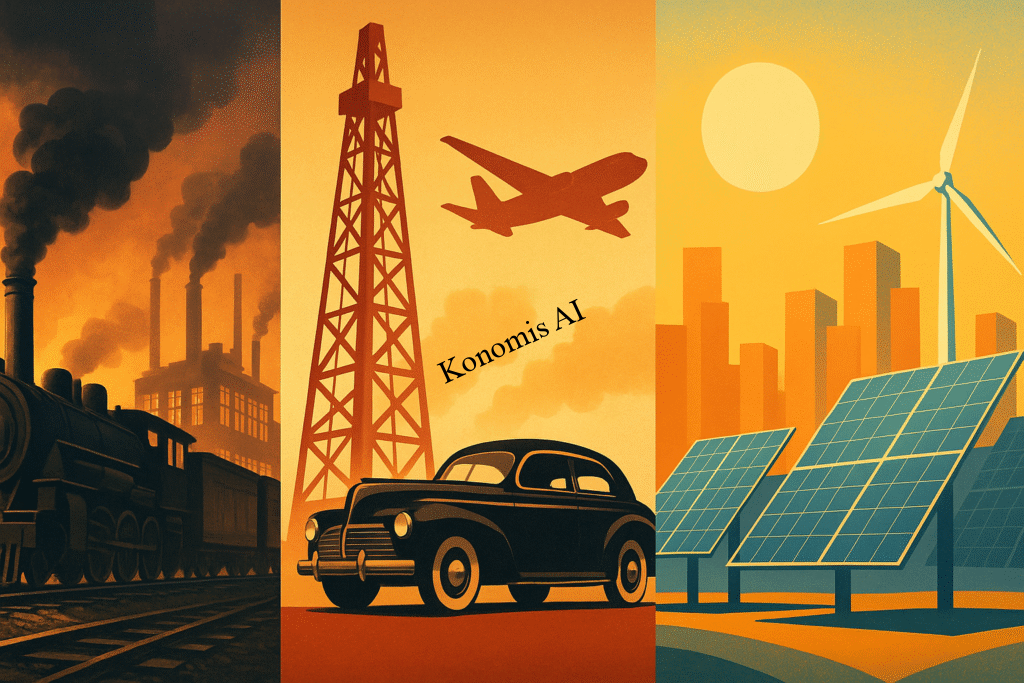
Every great leap in human civilization has been powered by a new form of energy — and each time, it has redrawn the global map of power. Coal turned Britain into the world’s first industrial superpower, driving factories, railways, and an empire that stretched across continents. Oil fueled the rise of the United States, giving birth to the modern age of cars, airplanes, and global trade dominance. Now, solar and battery technologies are empowering China, reshaping the 21st-century energy order.
But the next frontier — nuclear-powered vehicles and decentralized nuclear energy — will determine the true superpower of the future. It’s not just about who has the biggest military or the strongest economy anymore; it’s about who controls the cleanest, safest, and most limitless form of energy.
If the U.S. perfects fusion energy, it could usher in a new American century powered by innovation and science. If China successfully scales small modular reactors (SMRs) and exports them globally, it could become the world’s central energy hub. And if India masters its thorium-based reactors, it could rise as an unexpected but powerful new energy leader, proving that patience and vision can rival any technological head start.
In the end, the race for energy supremacy isn’t just about electricity or vehicles — it’s about who defines the future of human progress. The nations that master nuclear innovation won’t just power the world; they will shape it. The age of nuclear vehicles may soon begin, and with it, the dawn of a new world order.
FAQs
Why do energy transitions change global power?
Because energy is the backbone of industry, trade, and defense. Whoever controls it, controls the future.
Could oil-rich countries remain powerful in the nuclear age?
Unlikely—unless they diversify into nuclear, renewables, or advanced tech.
What makes thorium unique compared to uranium?
Thorium is safer, more abundant, and produces less waste than uranium, giving India an edge.
Is nuclear fusion really possible by 2050?
Yes, but scaling it to everyday use will be the real challenge. Private startups are making big strides.
Which country is best positioned for nuclear leadership?
The U.S. in fusion, China in SMRs, and India in thorium—all are contenders for dominance.
You Can Also Read
https://www.nuclearbusiness-platform.com
Konomis AI Thoughts
 Copyright 2023 CONOMIS


2 thoughts on “Future Energy Transitions: H0w Nuclear Vehicles Could Empower the Next Global Superpower”
Comments are closed.