
Table of Contents
Introduction
Life has a quiet but powerful way of teaching us truths when we least expect them. We spend years chasing goals, convinced that happiness is waiting at the finish line. We push ourselves harder, telling our mind, “Once I reach there, everything will make sense.” That belief keeps us moving, even when we’re tired.
Then one day, you arrive. The goal is achieved, the box is checked—but the feeling you imagined doesn’t last. The excitement fades, and a strange emptiness takes its place. In that still moment, a deep question rises from within: “Is this all there is?”

That question is not a weakness; it’s awareness. It reveals a truth we often ignore—happiness doesn’t live in achievements. Destinations give moments of joy, but they don’t give meaning. Meaning is built through experiences, struggles, lessons, and growth along the way.
That’s why it is best to see life as a journey, not a destination. When we slow down and truly live each step, life stops feeling like a race and starts feeling real—like two travelers pausing at a roadside tea stall, sharing stories, finding warmth in the moment, and moving forward a little wiser than before.
Understanding the Meaning Behind the Quote
Where the Idea Comes From
This idea is not new or modern. For centuries, philosophers, spiritual teachers, and poets have reflected on the nature of life and reached a similar understanding. Across different cultures and beliefs, the message remains the same: life is meant to be experienced, not completed like a task.
Ancient wisdom traditions often describe life as a flow rather than a fixed path. They remind us that change is constant and growth never truly ends. Instead of focusing on final outcomes, they encourage awareness, learning, and inner transformation at every stage.
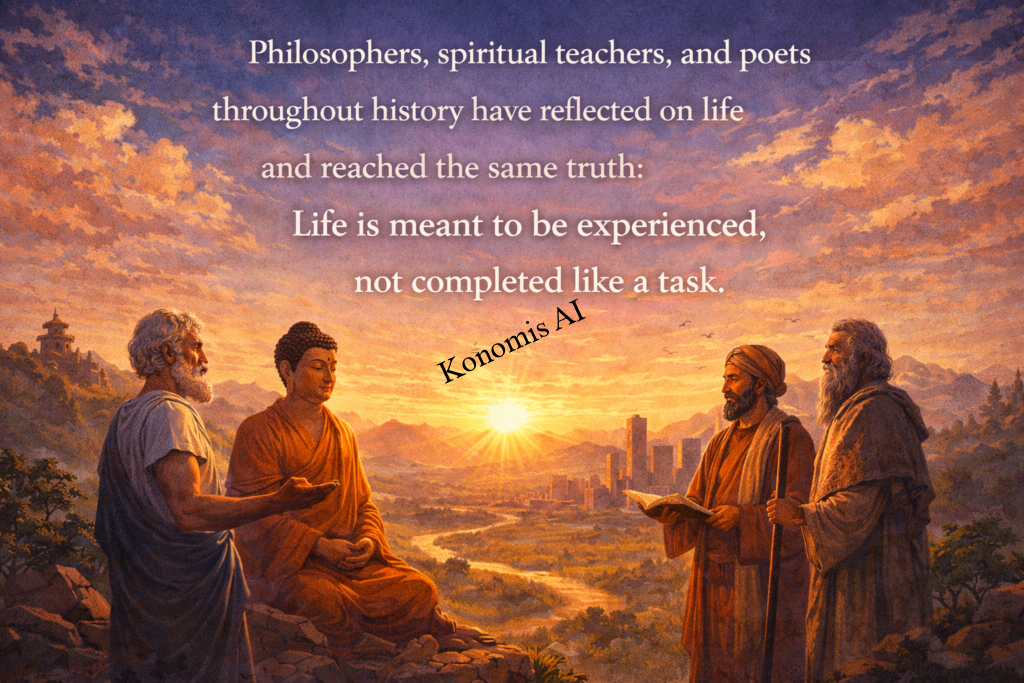
Even modern psychology supports this view. Studies show that long-term fulfillment comes from personal growth, purpose, and meaningful experiences—not from ticking off achievements. Goals may motivate us, but they are not where lasting happiness lives.
In essence, the true wisdom lies not in arriving somewhere, but in becoming someone. Life is not a checklist to finish; it is a process that shapes us over time, teaching us who we are through every step we take.
Why Humans Obsess Over Destinations
Humans obsess over destinations because we are trained to do so. From childhood, we are rewarded for outcomes—marks, ranks, trophies, promotions. Slowly, our mind learns a dangerous equation: achievement equals worth. We begin to believe that reaching the next milestone will finally make us feel complete.
Society strengthens this belief. It celebrates visible success and ignores silent effort. People applaud results but rarely notice the discipline, failures, and patience behind them. Over time, we start chasing money, status, relationships, and validation, not because they fulfill us, but because we are told they should.

This conditioning creates a habit of postponing happiness. We keep saying, “Once I get there, I’ll relax.” Joy is delayed, peace is postponed, and the present moment is sacrificed for a future promise.
The harsh truth is this: results are temporary moments, not permanent states. They fade quickly, leaving emptiness in their wake. When life is lived only for destinations, satisfaction never stays—it keeps moving to the next finish line.
Journey vs Destination – A Simple Comparison
Destination Thinking Explained
Destination thinking is a mental trap that convinces you happiness lives somewhere ahead of you. It whispers, “Just reach there, and then life will feel right.” Until that point, the present becomes nothing more than a waiting room.
Life under this mindset turns into a never-ending ladder. Graduate first. Then get a job. Then earn more. Then settle down. Then retire. Each step promises peace, but only after the next achievement is secured.

What really happens is brutal and quiet. The moment one goal is reached, its emotional reward fades, and a new destination takes its place. Satisfaction never settles—it keeps moving further away.
Look closely and you’ll see the pattern: happiness is always postponed. The present is sacrificed for a future that never quite arrives, and life slowly slips by while waiting to finally “start.”
Journey Thinking Explained
Journey thinking is a mindset that shifts focus from arrival to growth. Instead of saying, “I’ll be happy when I reach there,” it says, “I’ll grow while I move.” Life is no longer something to rush through—it becomes something to experience.
In this way of thinking, happiness is not tied to one achievement or future moment. It is found in learning, improving, falling, getting back up, and continuing forward. Every step matters, not just the last one.
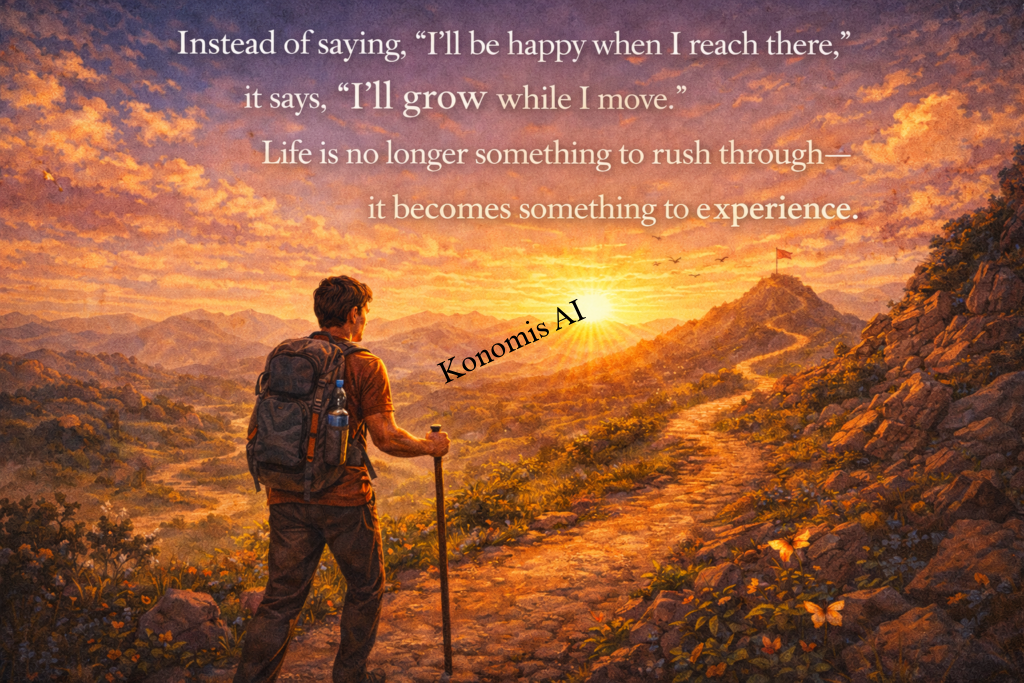
The road itself becomes meaningful. Challenges are no longer obstacles but teachers. Progress, even when slow, feels rewarding because it shapes who you are becoming.
Here, happiness isn’t a finish line waiting at the end. It lives in the walk, in the effort, and in the awareness of moving forward—one honest step at a time.
A Real-Life Analogy
Think of life like a long road trip. If your only focus is reaching the hotel, the journey feels tiring and pointless. You rush past beautiful sunsets, ignore the small roadside cafés, and miss the laughter that happens between stops.
Some of the best moments come from the unexpected—wrong turns that lead to new places, delays that create memories, conversations that happen only on the road. None of these are planned, yet they become the stories you remember most.

If you treat life the same way, always rushing toward the next destination, you miss what makes it meaningful. The real joy isn’t just in arriving—it’s in everything that happens along the way.
Why Seeing Life as a Journey Changes Everything
Reduces Stress and Anxiety
When your happiness depends on a single outcome, pressure becomes constant. Every delay feels like failure, every mistake feels heavy, and the fear of not reaching the goal creates anxiety. Your mind stays tense because everything seems to depend on one result.
But when you shift your focus to progress instead of perfection, something changes. Small steps start to matter. Effort feels meaningful, even when the outcome is uncertain. You allow yourself to learn instead of constantly judging yourself.
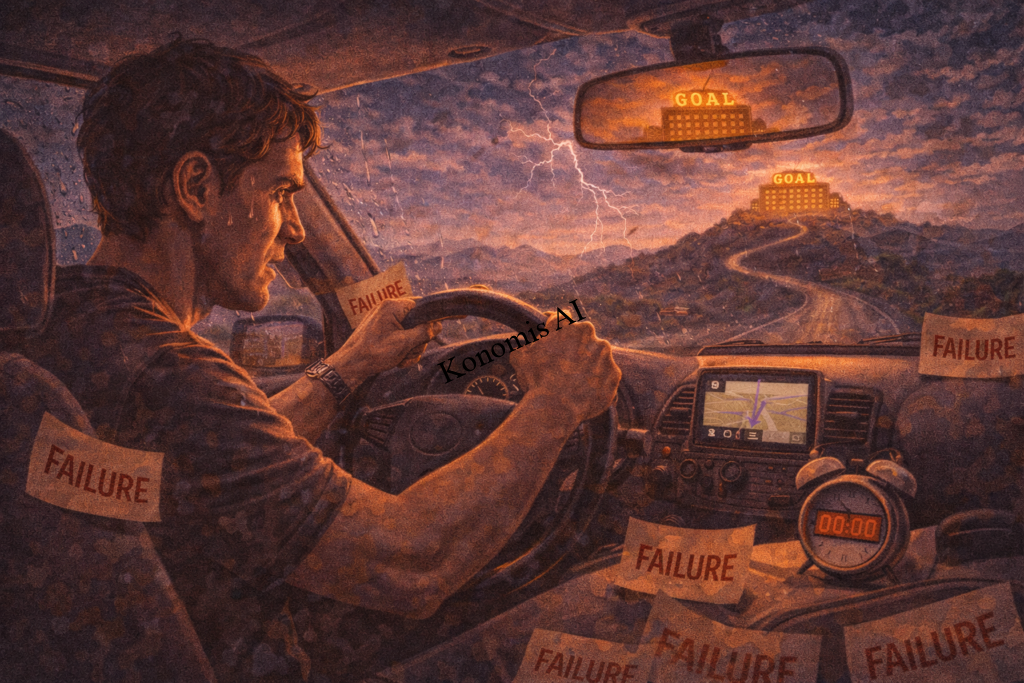
This mindset loosens stress at its root. You stop fighting the present and start working with it. When growth becomes the goal, pressure fades—and peace finds space to breathe.
Builds Emotional Resilience
Seeing life as a journey forges deep emotional resilience. Failures stop feeling like final verdicts and start feeling like redirections. What once looked like a dead end reveals itself as a new path waiting to be explored.
Pain, in this mindset, is no longer meaningless suffering. Every setback carries a lesson. Every disappointment holds information. Instead of asking “Why did this happen to me?” you begin asking, “What is this trying to teach me?”

This shift changes everything. You stop collapsing under pressure and start bending without breaking. Life may still hit hard, but it no longer defines you. Failure becomes a detour, pain becomes feedback, and resilience becomes your natural response to adversity.
Encourages Continuous Growth
Seeing life as a journey fuels continuous growth because there is no final version of you to arrive at. You are not meant to be finished, fixed, or complete. You are meant to evolve.
This mindset keeps you open. You keep learning new skills, new ways of thinking, and new truths about yourself. At the same time, you gain the courage to unlearn beliefs, habits, and identities that once protected you but now hold you back.

Growth stops being something you chase and becomes something you live. When life is viewed as a journey, change is not a threat—it is proof that you are moving forward. Learning, unlearning, and relearning become the rhythm of a life that keeps expanding.
The Psychological Benefits of the Journey Mindset
Happiness Is Found in Progress
Happiness is rarely found in arrival; it lives in progress. Psychology consistently shows that humans feel most alive and motivated when they are moving toward a goal, not when they finally reach it. The sense of direction matters more than the destination itself.
When you are making progress, even small steps create momentum. Effort feels meaningful, time feels purposeful, and hope stays alive. Your mind is engaged, focused, and energized by growth.
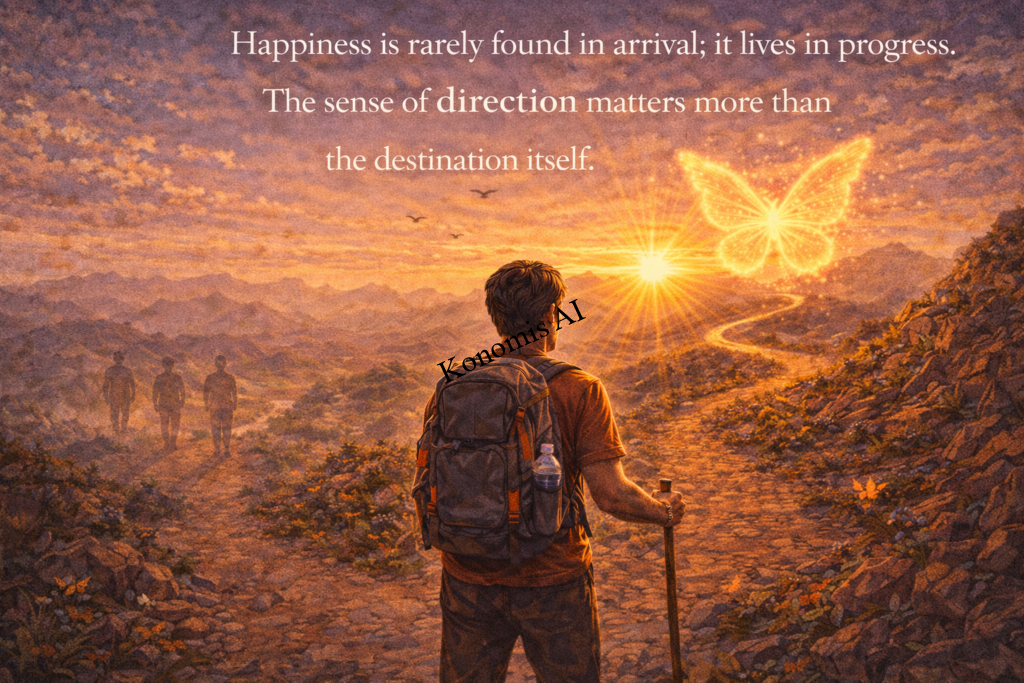
But once you arrive, that energy fades. The goal is achieved, the excitement settles, and the mind quickly looks for the next target. This is why arrival feels brief, while progress feels fulfilling.
True happiness isn’t about reaching the finish line—it’s about knowing you’re moving forward, growing, and becoming more than you were yesterday.
Dopamine vs Fulfillment
Destinations trigger dopamine—the brain’s reward chemical. When you achieve a goal, buy something new, or reach a milestone, you get a quick emotional high. It feels good, but only for a moment. Soon, the excitement fades, and the mind starts craving the next hit.
Journeys work differently. They don’t rely on sudden rewards; they create meaning over time. The effort, discipline, struggles, and small wins slowly build a deeper sense of fulfillment. This kind of satisfaction doesn’t spike—it settles.
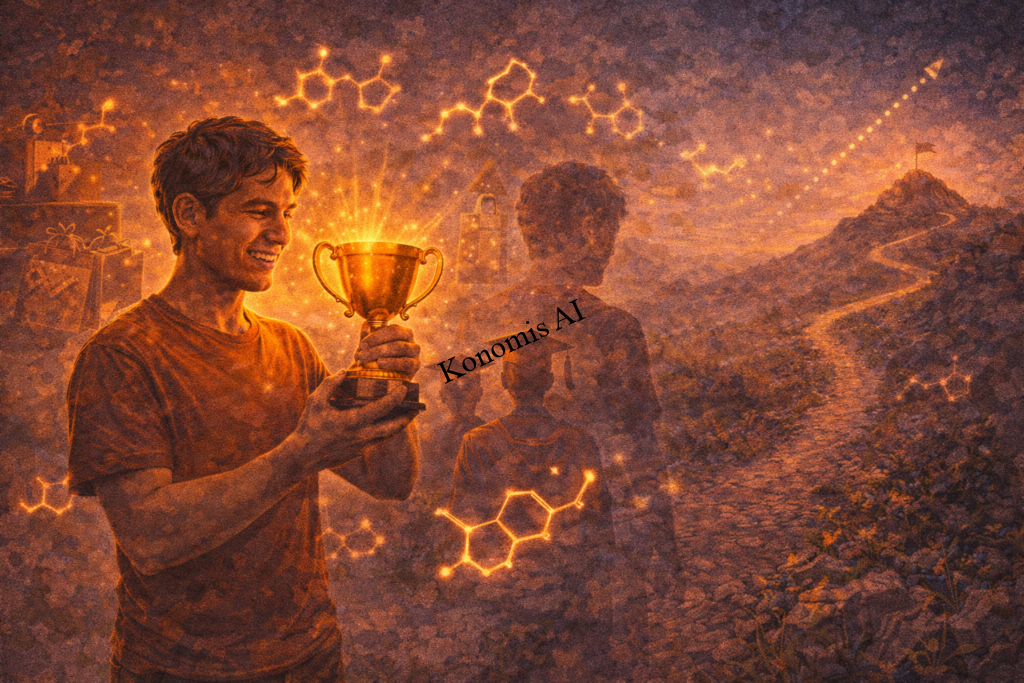
Dopamine-driven happiness is loud but short-lived. Fulfillment is quiet, steady, and lasting. One excites you briefly; the other grounds you deeply. When you choose the journey, you stop chasing emotional highs and start building a life that actually feels complete.
Why Milestones Don’t Satisfy for Long
Have you ever noticed how quickly excitement fades after achieving a goal? What once felt life-changing soon becomes normal. The celebration ends, and the emotional high quietly disappears. This isn’t failure—it’s human nature.
Milestones satisfy the ego, but only for a moment. They change your situation, not who you are. Once the mind adapts, it starts searching for the next target, leaving you restless again.
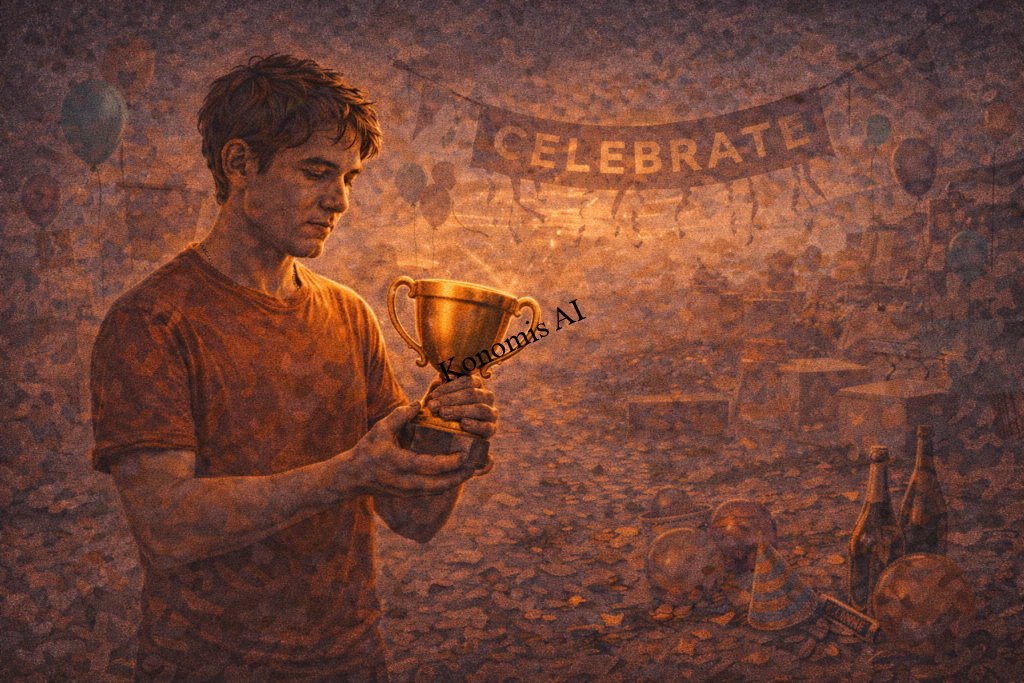
What truly lasts is identity growth. When you grow in confidence, discipline, wisdom, or self-awareness, that change stays with you. It reshapes how you think, act, and respond to life.
Achievements decorate your journey, but growth transforms you. That’s why milestones don’t satisfy for long—because becoming matters far more than arriving.
Life Lessons You Learn Only on the Journey
Failure as a Teacher
Failure is often misunderstood. It is not a verdict on your worth or potential—it is a mentor disguised as disappointment. When viewed through the lens of the journey, failure stops being something to fear and starts becoming something to learn from.
Every mistake carries information. It shows you what doesn’t work, where you need to adjust, and how you can grow stronger. These lessons cannot be taught by success alone; they are earned through experience.
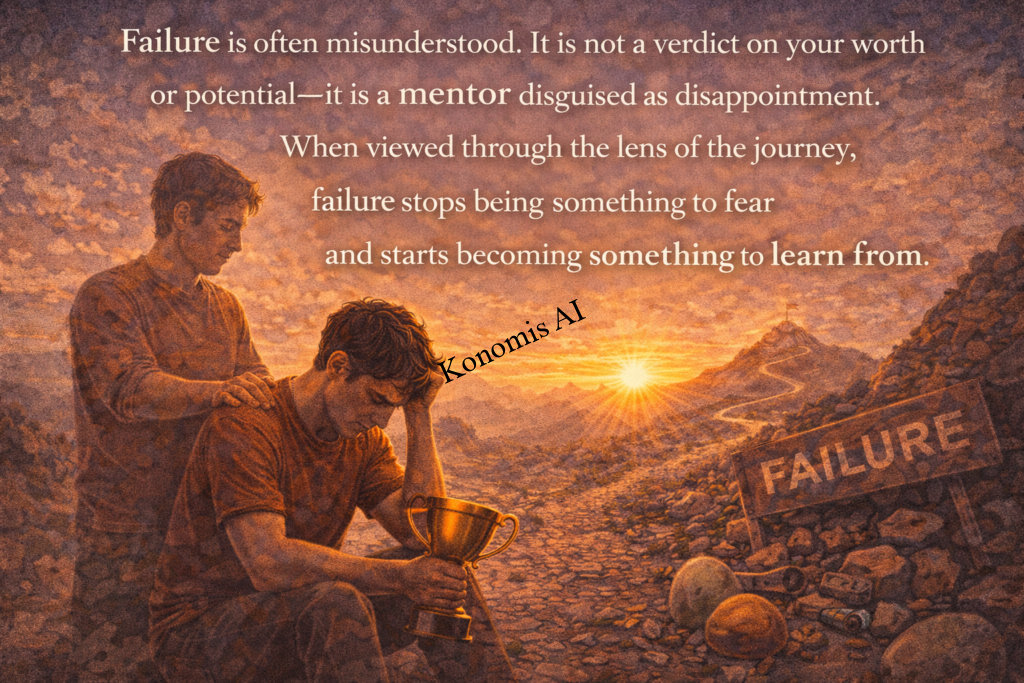
Instead of ending your path, failure refines it. It sharpens your judgment, builds humility, and strengthens resilience. When you allow failure to teach you, it doesn’t push you backward—it quietly moves you forward in a wiser direction.
Patience as a Skill
Patience is not something we’re born with—it’s a skill learned through the journey. When life doesn’t move at our speed, it teaches us that timing matters as much as effort. Pushing harder doesn’t always mean moving forward.
Journeys reveal that some doors don’t open through force. They open through readiness. Experiences, setbacks, and waiting periods quietly prepare you for what comes next, even when it feels like nothing is happening.
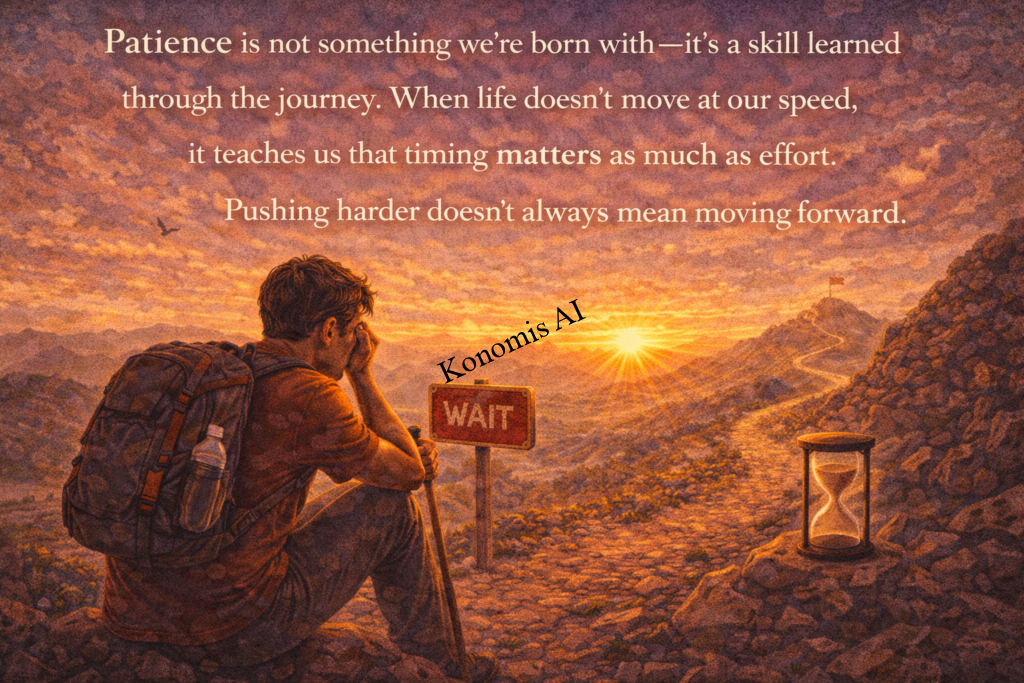
In learning to wait, you also learn to trust the process. Patience sharpens awareness, builds emotional control, and aligns you with the right moment. Often, the doors that open naturally are the ones that change everything.
Gratitude for Small Moments
Gratitude grows when you learn to notice the small moments. The smell of rain on warm ground, a smile from a kind stranger, a quiet evening that lets your mind rest—these are not grand achievements, yet they carry deep meaning.
These moments don’t wait for you at the destination. They appear softly along the way, often when you’re not rushing or distracted. If you’re always focused on what’s next, they pass unnoticed.
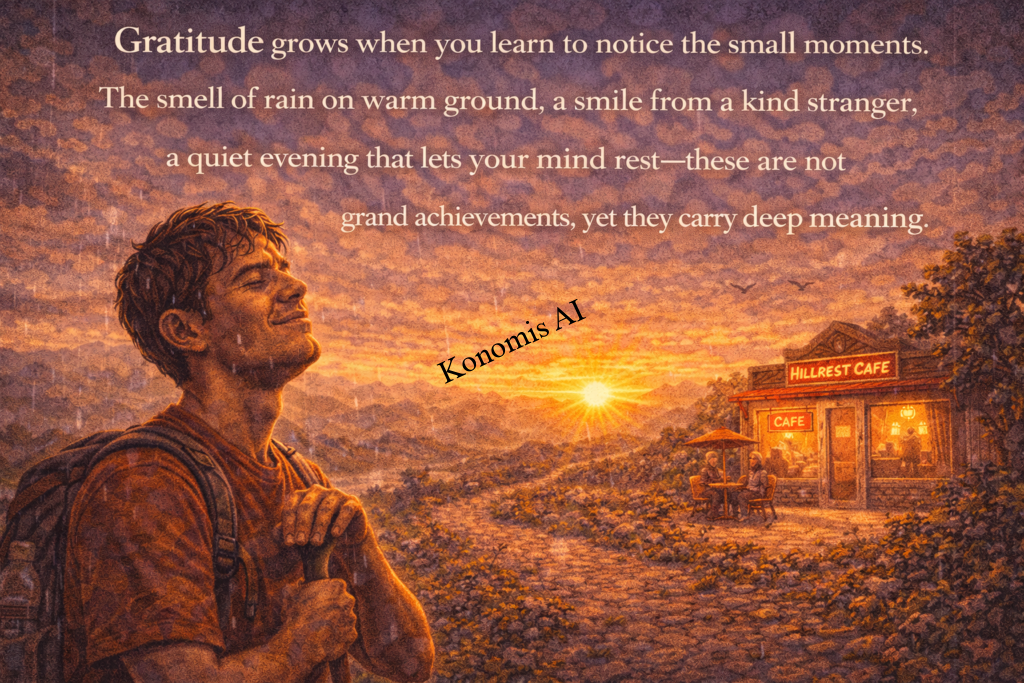
Journey thinking slows you down enough to see them. It reminds you that life’s richness isn’t stored in big milestones, but scattered through ordinary days. When you learn to appreciate these small moments, life feels fuller—right now, not someday.
Career, Money, and Success – Journey Perspective
Chasing Titles vs Building Skills
Chasing titles can feel rewarding, but titles are temporary. Job roles change, status fades, and recognition doesn’t last. A title may impress others for a moment, but it doesn’t guarantee growth or security.
Skills, on the other hand, compound over time. Every hour of practice, every challenge faced, and every lesson learned adds lasting value. Skills stay with you, travel with you, and adapt to new opportunities.
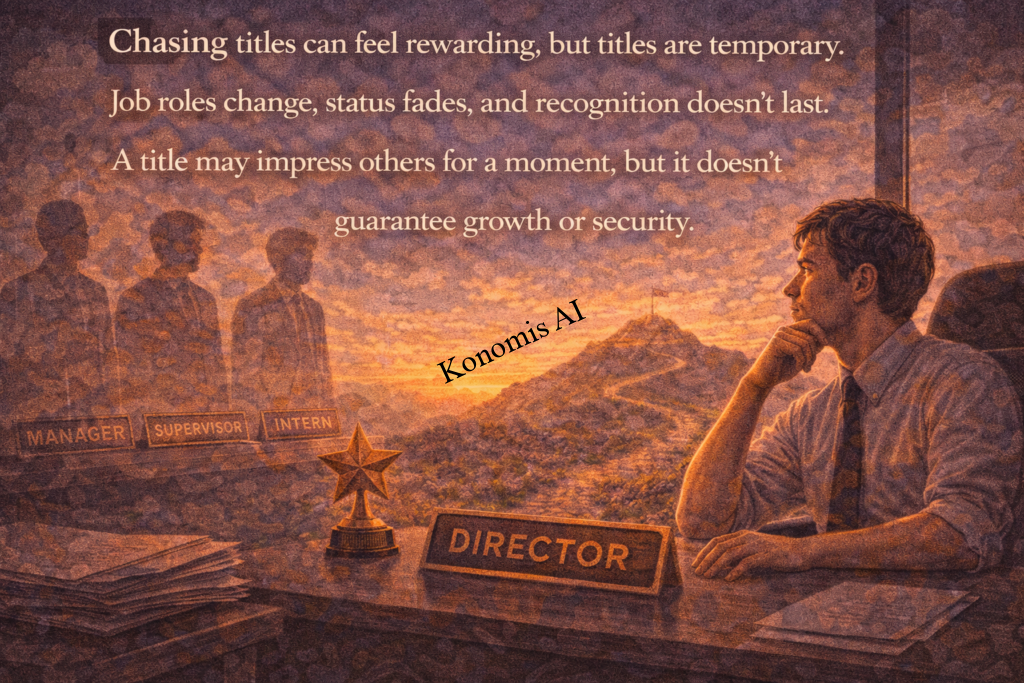
A journey mindset understands this difference. It focuses on mastery rather than medals, learning rather than labels. When you build skills instead of chasing titles, success becomes sustainable—and growth never stops.
Wealth as a Process, Not a Number
Wealth is often misunderstood as a number to reach, but in reality, it is a process to build. When money becomes the destination, stress, greed, and dissatisfaction follow. No amount ever feels enough.
True wealth is created through consistent value creation over time—solving problems, building skills, and earning trust. Money flows naturally as a result of effort, discipline, and long-term thinking.
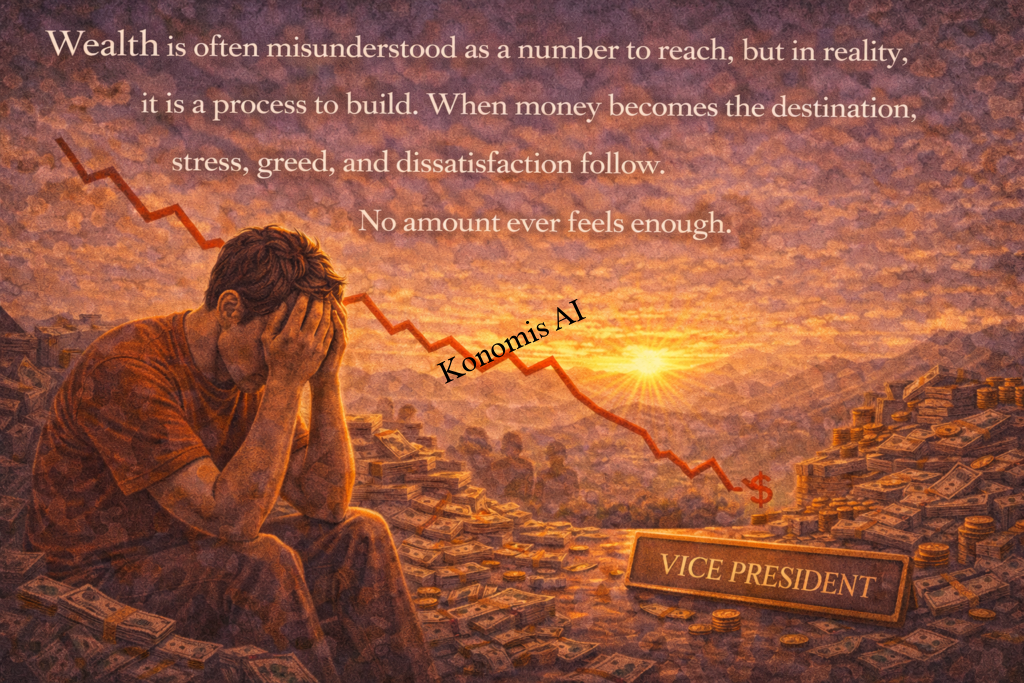
A journey mindset shifts focus from quick gains to sustainable growth. Instead of chasing numbers, it builds systems, habits, and impact. When you treat wealth as a process, money stops controlling you—and starts following the value you create.
Burnout Comes From Destination Obsession
Burnout often begins with destination obsession. When success is treated as the only moment worth resting, the present turns into constant pressure. You keep pushing, ignoring exhaustion, telling yourself you’ll slow down after you make it.
This mindset is dangerous. When rest is postponed, energy drains faster than progress grows. The body and mind don’t wait for achievements to recover—they break first.

A journey mindset understands that rest is part of the process, not a reward at the end. Sustainable success comes from balance. When you honor recovery along the way, you protect your growth—and prevent burnout from arriving before success ever does.
Spiritual Growth and Inner Journey
Self-Discovery Over Self-Improvement
We often approach life believing we are broken and need fixing. Self-improvement culture constantly tells us to become better, faster, stronger—as if who we are right now is not enough. This creates pressure instead of peace.
Self-discovery offers a different path. It invites understanding rather than correction. Instead of forcing change, you begin to observe your patterns, fears, strengths, and desires with honesty and compassion.

The journey inward teaches you why you think the way you do, why certain things trigger you, and what truly matters to you. From this awareness, growth happens naturally.
You don’t need fixing—you need clarity. And the most important journey you will ever take is the one that leads you back to yourself.
Presence as the Ultimate Practice
Presence is the most powerful practice of all, because the present moment is the only place where life truly exists. The past lives only in memory, and the future exists only in imagination. Yet we spend most of our time trapped between the two.
When you are fully present, even ordinary moments feel alive. You listen more deeply, experience more fully, and respond more honestly. Life stops rushing past you and starts meeting you where you are.
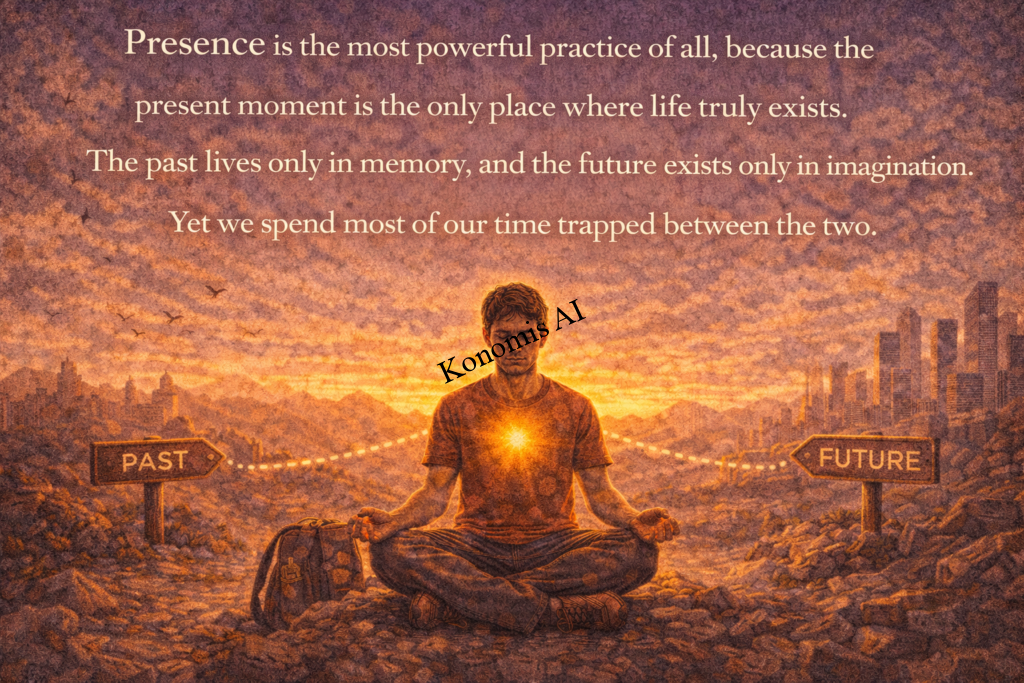
A journey mindset trains presence. It reminds you that nothing meaningful happens “later.” Love, growth, peace, and clarity all happen now.
When you master presence, you stop waiting for life to begin. You realize it has been happening all along—right here, in this moment.
Social Media and the Illusion of Destinations
Highlight Reels vs Real Life
Social media shows us highlight reels, not real life. It presents polished destinations—success, happiness, beauty—without showing the long, messy journeys behind them. The struggle, doubt, failures, and slow progress are carefully edited out.
When you compare your everyday reality to someone else’s highlight reel, it creates unnecessary pain. You start feeling behind, inadequate, or unsuccessful, even when you are growing at your own pace.
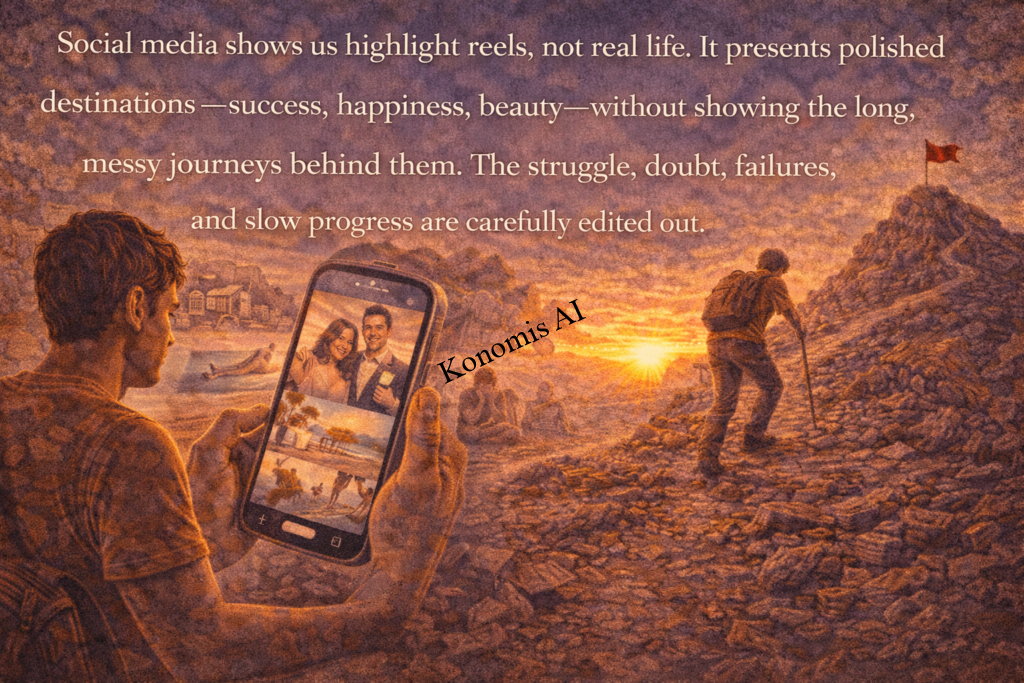
This is why comparison hurts so deeply. You’re comparing your journey to someone else’s final frame. A journey mindset breaks this illusion by reminding you that every visible success is built on invisible effort—and your path doesn’t need to look like anyone else’s to be meaningful.
Comparison Steals the Joy of the Journey
Comparison quietly steals the joy from your journey. The moment you measure your path against someone else’s finish line, your progress stops feeling meaningful. What was once growth suddenly feels like delay.
Everyone starts from a different place, carries different struggles, and walks a different road. When you ignore that and compare outcomes, dissatisfaction becomes inevitable. No matter how far you’ve come, it will never feel enough.
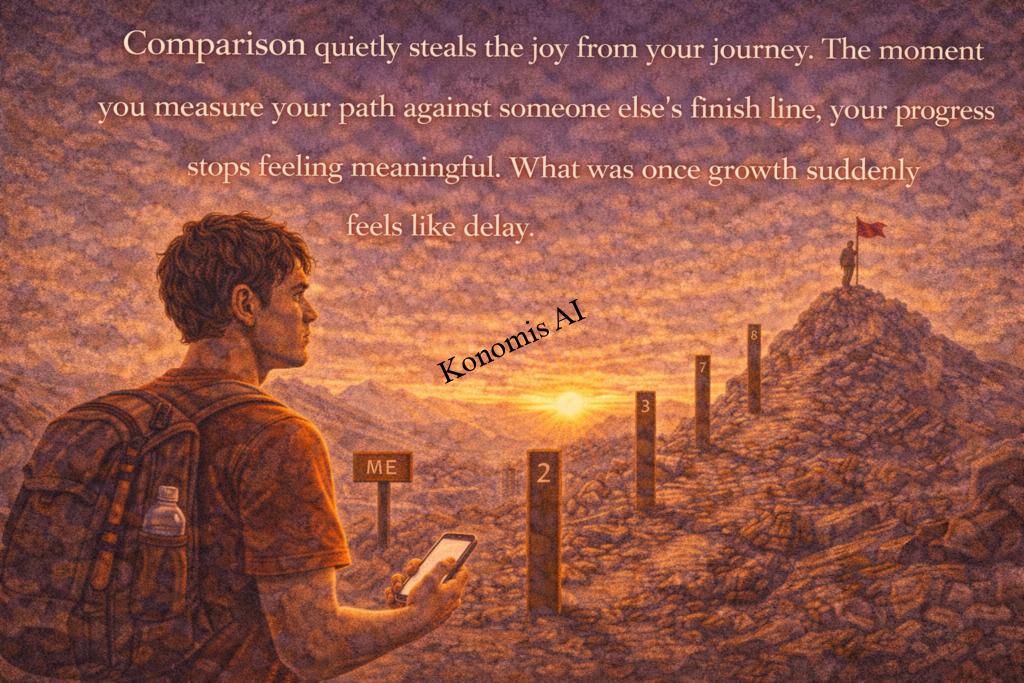
A journey mindset brings you back to your own lane. It reminds you that your pace is valid and your progress is real. The moment you stop comparing, you reclaim the joy of moving forward—on your own path, in your own time.
How to Train Yourself to Enjoy the Journey
Shift Your Goals
Shifting your goals changes how you experience life. Instead of chasing only outcomes, focus on process goals—the actions you can control every day. Outcomes depend on many factors, but effort and consistency are always in your hands.
Process goals keep you grounded in the present. Showing up daily, practicing regularly, and improving little by little creates real momentum. You stop waiting for big wins and start valuing steady progress.
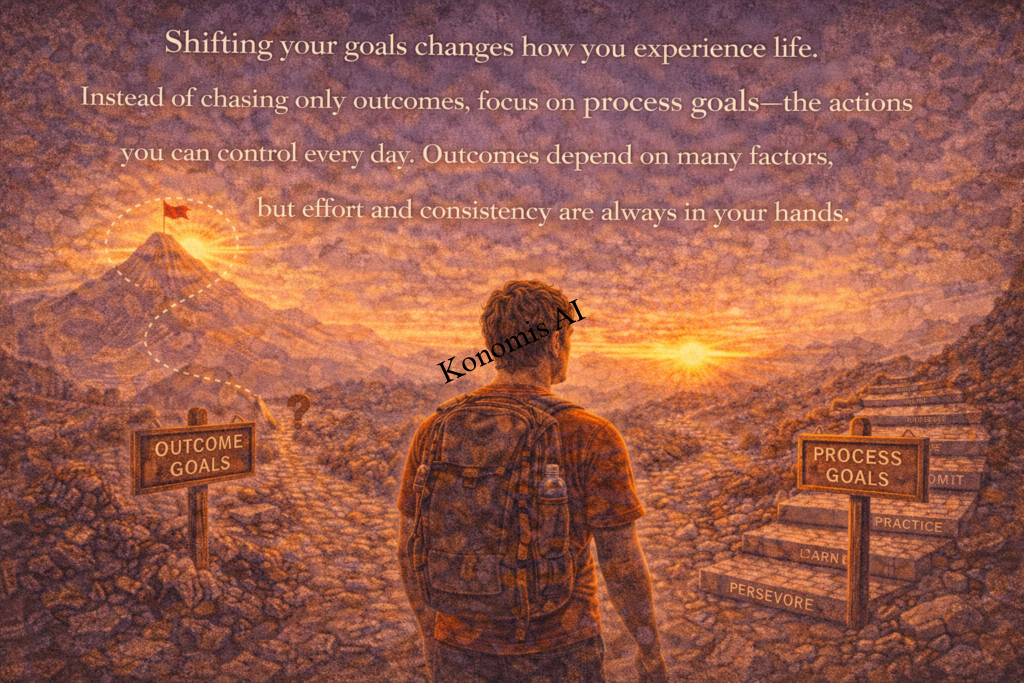
Consistency matters more than intensity. Intensity burns fast and fades quickly, but consistency builds strength over time. When you focus on the process, success becomes sustainable—and the journey itself starts to feel rewarding.
Celebrate Small Wins
Celebrating small wins keeps the journey alive. Every step forward matters, even when progress feels slow or imperfect. Growth doesn’t always come in big breakthroughs—it often arrives quietly, through consistent effort.
When you acknowledge small wins, you train your mind to recognize progress instead of absence. Finishing a task, showing up on a difficult day, or simply not giving up all count more than you realize.
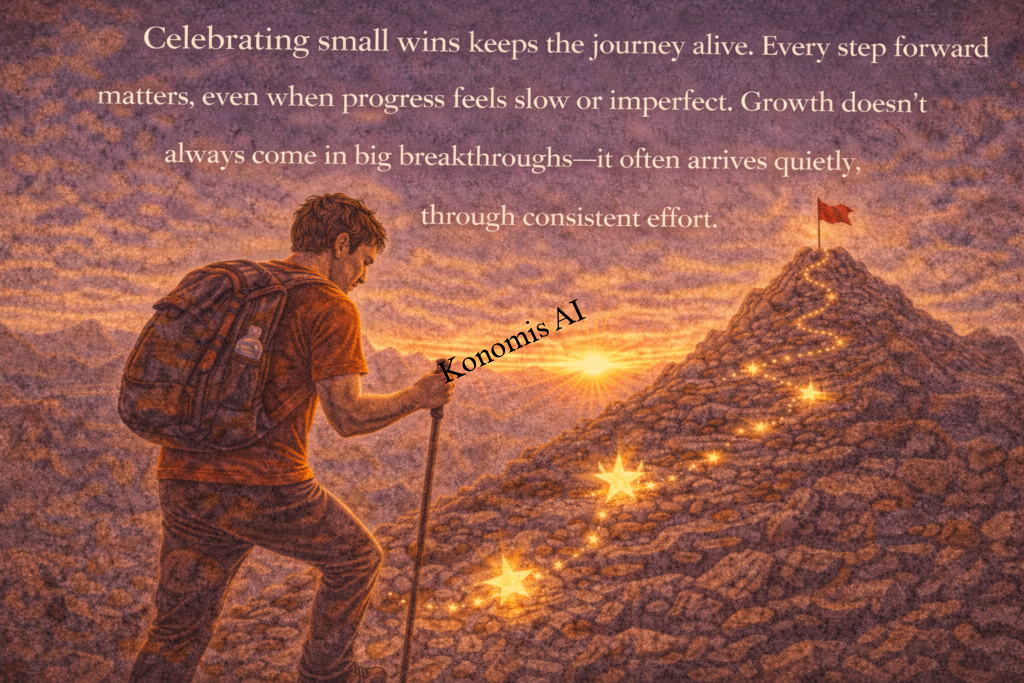
Slow steps are still movement. They build confidence, momentum, and self-trust. When you celebrate them, you stop feeling stuck and start feeling capable. Over time, these small wins add up—and they’re what carry you forward, one steady step at a time.
Journaling the Journey
Journaling the journey helps you see your growth clearly. When you write down your experiences, thoughts, and emotions, you begin to understand how far you’ve come—even when progress feels invisible in the moment.
Putting your journey into words turns chaos into clarity. Patterns emerge, lessons become obvious, and struggles start to make sense. What once felt confusing slowly reveals meaning.
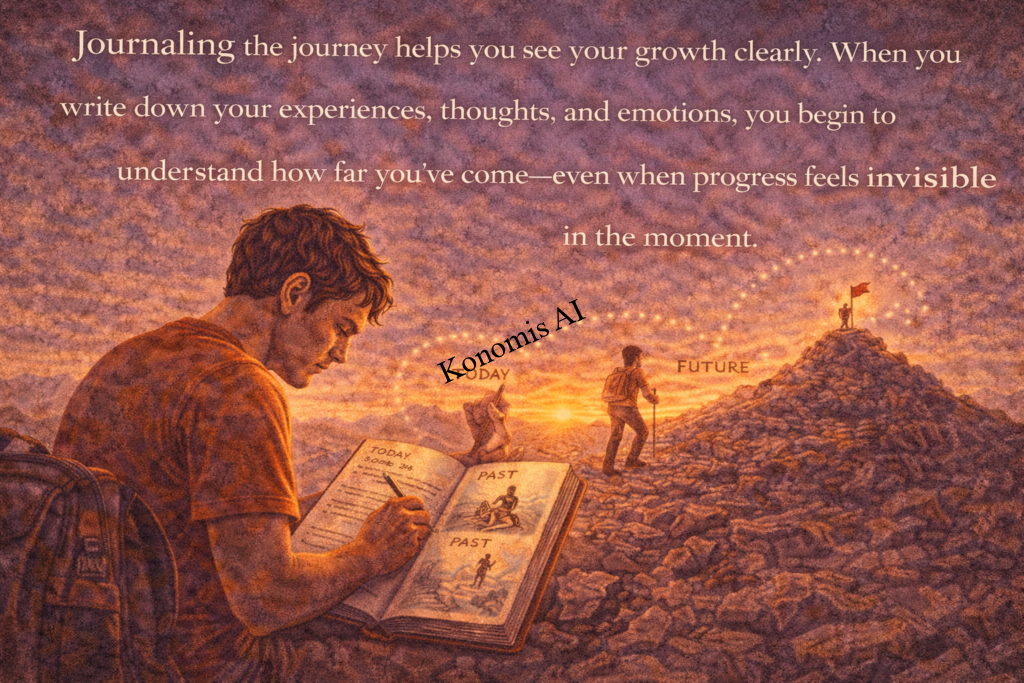
One day, when you look back, you won’t be moved most by the destinations you reached. You’ll be moved by how the journey shaped your mindset, strengthened your character, and changed who you are. Writing it down preserves that transformation—and reminds you that the journey mattered all along.
Common Myths About the Journey Mindset
“Journey Means No Ambition”
Many people believe that focusing on the journey means giving up ambition, but that couldn’t be further from the truth. Journey thinking does not kill ambition—it refines it.
It means you still aim high, work hard, and pursue meaningful goals, but you are not emotionally chained to the outcome. Your self-worth is no longer dependent on winning or arriving.
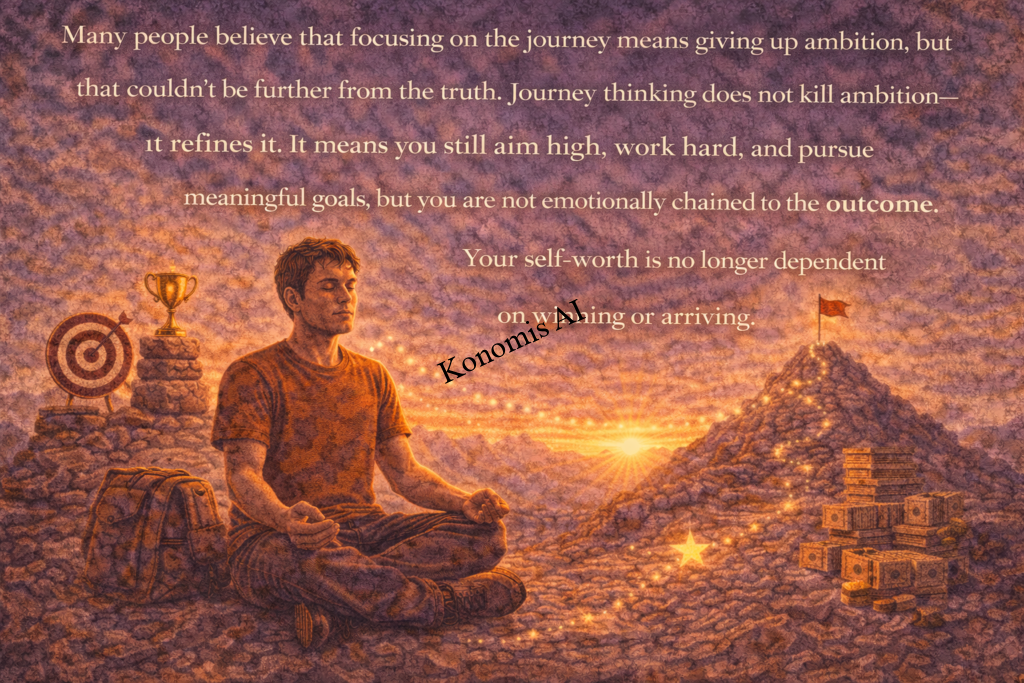
This is ambition without attachment. You give your best effort, stay disciplined, and keep moving forward—while remaining calm about results. When ambition is free from obsession, it becomes powerful, sustainable, and deeply fulfilling.
“Destinations Don’t Matter at All”
Some people misunderstand the journey mindset and assume destinations don’t matter at all. That’s not true. Destinations do matter—but not in the way we usually think.
Destinations act as signposts. They give direction, motivation, and structure to the journey. They help you decide where to go next, but they are not meant to define your happiness or identity.
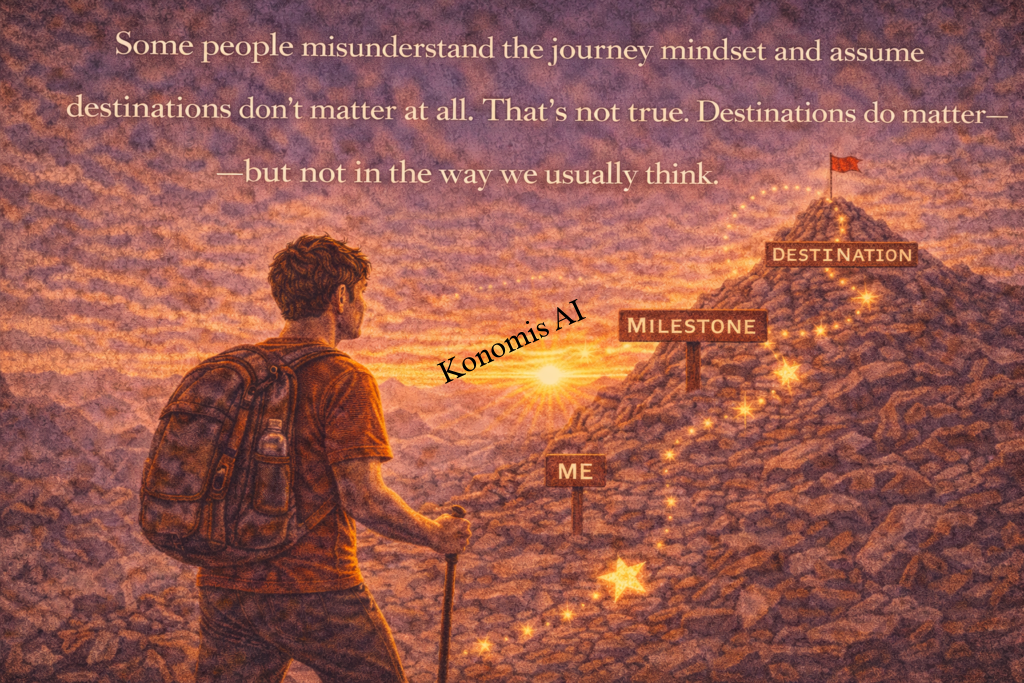
When treated as final answers, destinations disappoint. When treated as guides, they serve their purpose. The real meaning of life isn’t found in arriving—it’s found in how you grow, learn, and evolve while moving from one signpost to the next.
Signs You Are Living Only for the Destination
Constant Dissatisfaction
Constant dissatisfaction is a clear sign of living only for destinations. No matter what you achieve, it never feels like enough. The goal is reached, but satisfaction slips away almost immediately.
This happens because your mind is trained to look forward, not inward. Instead of appreciating progress, it immediately searches for the next target. Success becomes a moving finish line, always just out of reach.
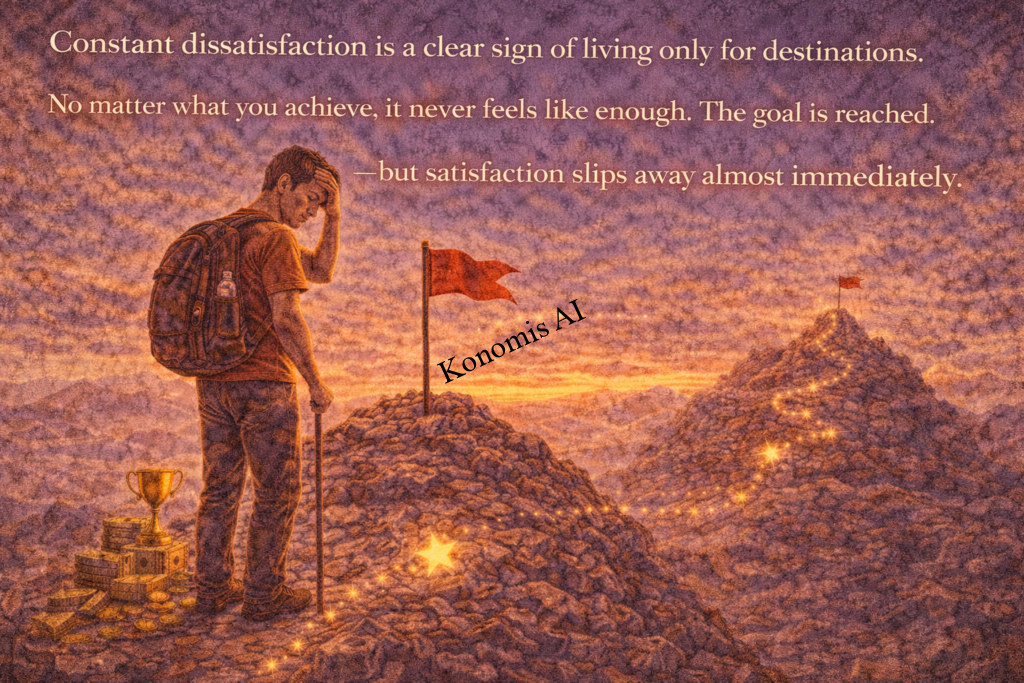
When nothing feels enough, it’s not because you’re failing—it’s because you’re measuring life by arrival instead of growth. A journey mindset restores contentment by teaching you to value how far you’ve come, not just how far you still want to go.
Delayed Happiness Syndrome
Delayed happiness syndrome is the habit of postponing joy. You keep telling yourself, “After this, I’ll relax,” “After this, I’ll be happy,” or “After this, life will slow down.” The present becomes something to survive, not enjoy.
This mindset traps you in constant pressure. Rest, peace, and joy are always scheduled for the future, while today is filled with stress and urgency. The problem is, the “after” never truly arrives.
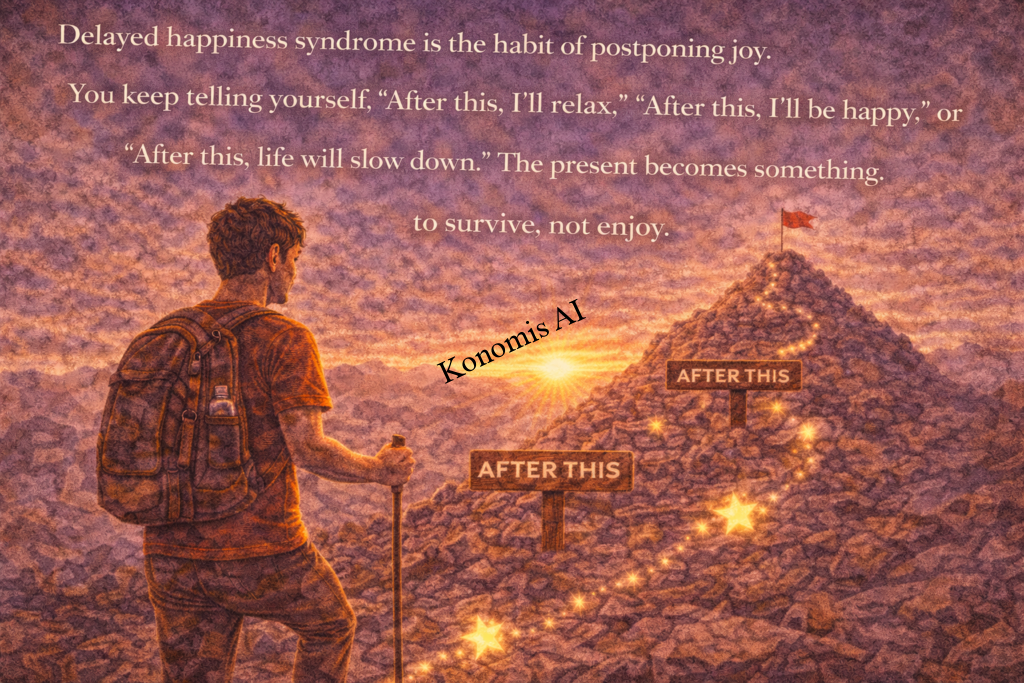
Life keeps moving, goals keep changing, and happiness keeps getting delayed. A journey mindset breaks this cycle by reminding you that joy isn’t a reward waiting at the end—it’s something you allow yourself along the way.
Turning Everyday Life into a Meaningful Journey
Morning to Night Awareness
Morning to night awareness means living deliberately instead of on autopilot. It’s about being present in small, ordinary moments—how you start your day, how you speak to people, how you move through routine tasks.
When you pay attention, even simple routines begin to feel meaningful. A quiet morning, a mindful meal, a short walk, or a moment of rest can carry a sense of calm and purpose.
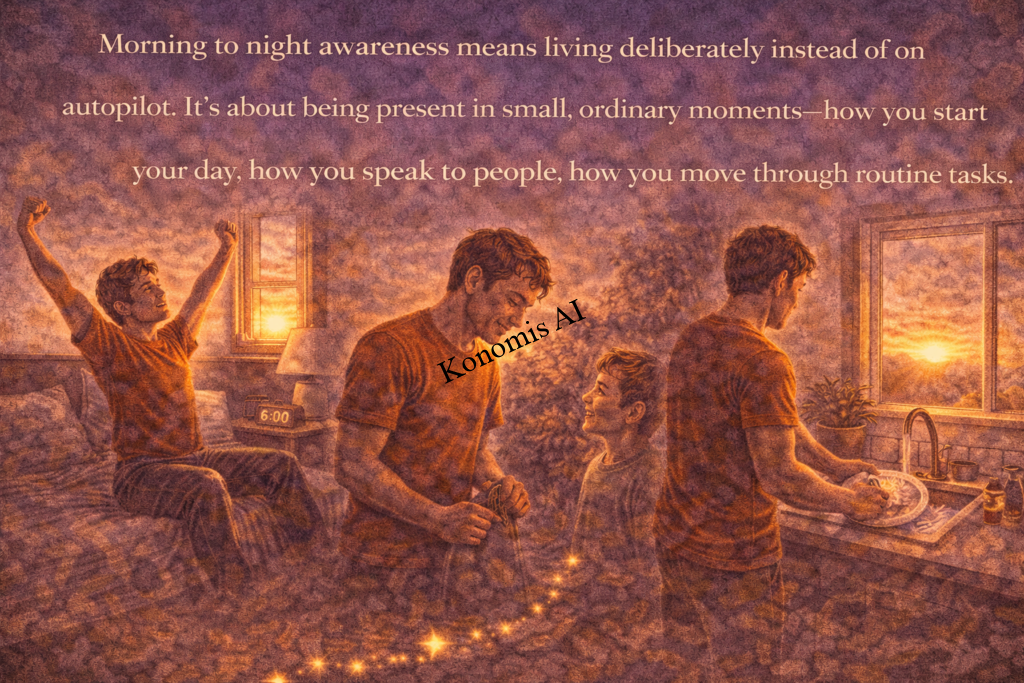
This awareness turns everyday life into something sacred. You stop waiting for special moments and start honoring the ones already here. When you live deliberately, the journey isn’t just happening between milestones—it’s unfolding in every moment of your day.
Designing Your Own Path
Designing your own path begins with questioning the definitions of success you’ve inherited. Society, family, and culture often hand us ready-made goals and timelines, but they may not reflect who you truly are.
When you live by borrowed definitions, life feels heavy and misaligned. You achieve what’s expected, yet something inside feels missing. That discomfort is a signal—not failure.
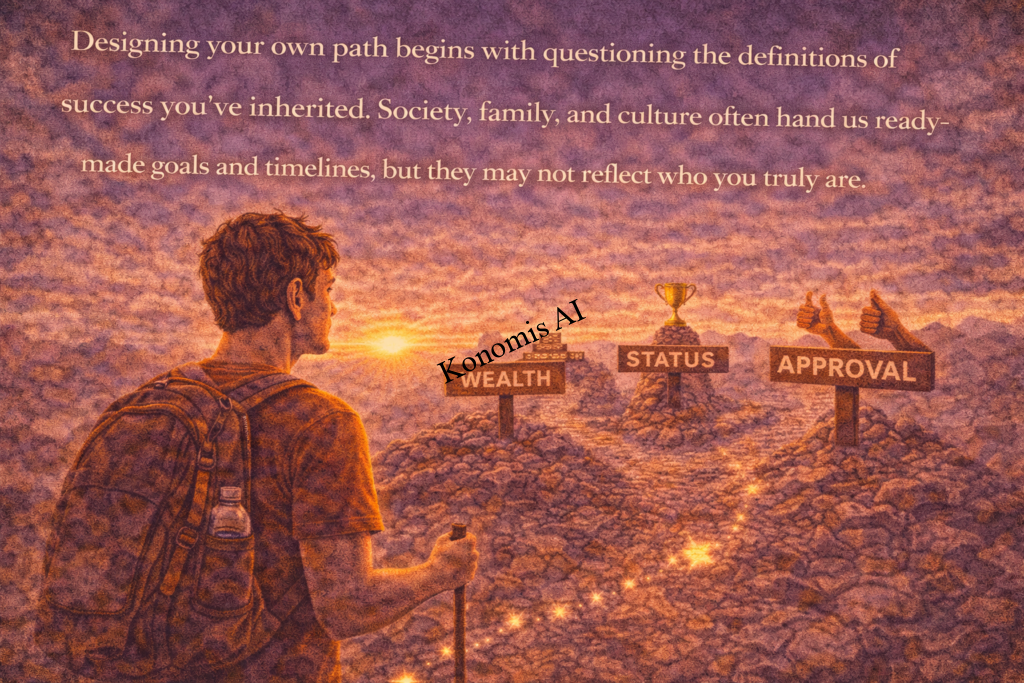
A journey mindset invites you to choose consciously. You define success on your own terms, based on your values, strengths, and purpose. When you design your own path, progress feels authentic—and the journey finally feels like yours.
Final Thoughts on Life as a Journey
Why the Journey Is the Reward
The journey is the reward because it is where life actually happens. At the end of life, trophies, titles, and achievements fade into the background. What remains is the person you became—the lessons you learned, the courage you built, and the love you gave and received.
Destinations may mark moments, but transformation shapes a lifetime. The struggles that strengthened you, the failures that taught you, and the experiences that changed your perspective leave a deeper imprint than any external success.
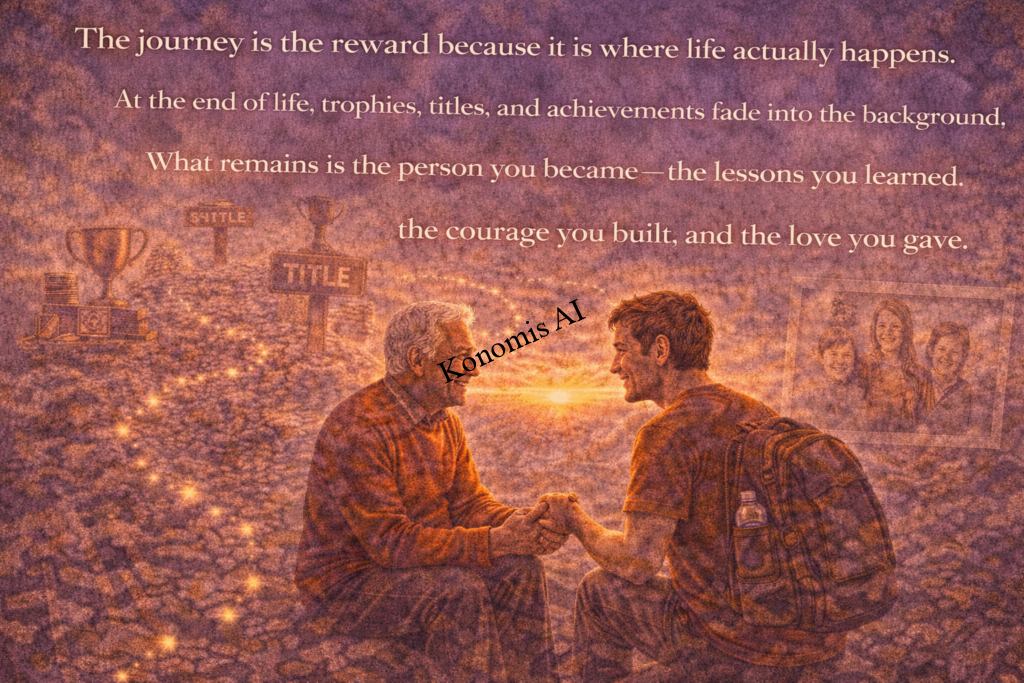
Life is not asking you to simply arrive somewhere. It is asking you to experience deeply, evolve continuously, and express your true self along the way. When you understand this, the journey stops feeling like a means to an end—and starts feeling like the purpose itself.
Conclusion
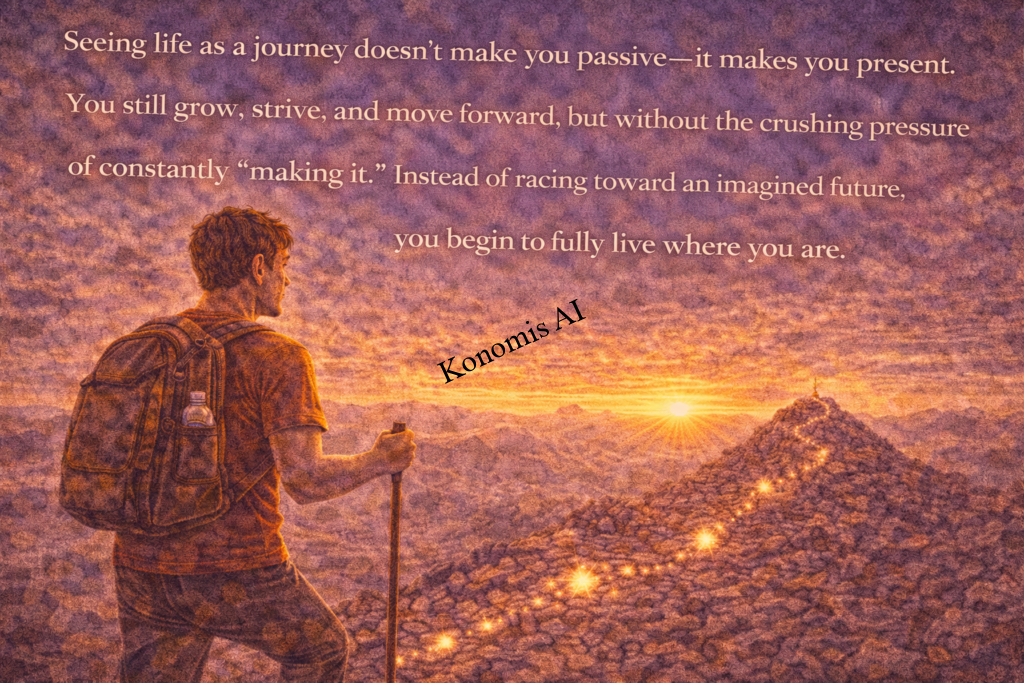
Seeing life as a journey doesn’t make you passive—it makes you present. You still grow, strive, and move forward, but without the crushing pressure of constantly “making it.” Instead of racing toward an imagined future, you begin to fully live where you are.
This shift frees you from the endless chase. You stop measuring your worth by milestones and start valuing your growth, effort, and awareness. Life becomes less about proving and more about becoming.
When you slow down and stop rushing toward tomorrow, today starts to feel alive. Moments gain meaning, progress feels real, and peace becomes possible. And in the end, that presence—right here, right now—is the truest form of success.
FAQs
Why is life compared to a journey and not a destination?
Because growth, learning, and meaning happen along the way—not at the end.
Can I still have goals with a journey mindset?
Absolutely. Goals guide you, but they don’t control your happiness.
How does this mindset reduce stress?
It removes the pressure of perfection and focuses on progress.
Is destination thinking always bad?
No, but relying on it for happiness is harmful.
How can I start living a journey-focused life today?
Slow down, notice your experiences, and value effort over outcome
You Can Also Read
https://www.wattpad.com/2367541-life-is-a-journey-not-a-destination
Konomis AI Thoughts
 Copyright 2023 CONOMIS